

As an Amazon Associate, we earn from qualifying purchases. We may also earn a commission from other retailers linked on this page, at no extra cost to you.
The Rolex Day-Date is the watch: Rolex’s wristwatch displaying both the day and the date. “President” more precisely describes its distinctive three-link, rounded-link bracelet, although the nickname is also widely used for the complete watch.
That distinction matters because the bracelet and the watch are not interchangeable terms. It helps clarify historical accounts, identify vintage examples, and assess how a particular watch has been configured—especially when discussing replacement bracelets, period correctness, or collecting terminology.
Rolex introduced the Day-Date commercially in 1956, and it became the first wristwatch to spell out the full weekday in an arched window at 12 o’clock, with the date at 3 o’clock. Its political associations helped cement the “President” name: several US presidents wore the watch, and Lyndon B. Johnson is believed to have originated the nickname.
This Rolex Day-Date guide separates the popular myth from the technical object. It follows the model’s history and movement development, explains the bracelet terminology, considers how the day and date are set, and outlines the details that matter when buying or collecting vintage and modern examples.
The Short Version: The Day-Date in Plain English
At its core, the Day-Date is Rolex’s full-calendar model: references 6510 and 6511 introduced the line commercially in 1956, with early examples offered in precious metals. Early generations used non-quick-set mechanisms, so correcting the calendar required more patience than it does today. Reference 18038 brought the quick-set date with Caliber 3055, while reference 18200, introduced in 1988 with Caliber 3155, added independent quick-setting for both the day and date.
Modern Day-Date offerings span 36mm and 40mm cases in yellow gold, pink gold, white gold, and platinum. The “President” refers to the model’s distinctive 3-link, rounded-link bracelet configuration, rather than to a movement or calendar complication. That distinction matters in a Rolex Day-Date guide: when comparing vintage and modern examples, the meaningful technical differences usually concern the calendar mechanism, movement, case, and dial—not the bracelet’s name.
How the Day-Date Works: Displays, Movements, and Quick-Set Functions
The Day-Date’s defining display is unusually direct: the full weekday appears in an arched window at 12 o’clock, while the date sits at 3 o’clock. The full day remains central to the model’s identity because it makes the calendar function immediately legible rather than reducing the weekday to an abbreviation. Rolex’s format also helped establish a layout now common among day-date watches.
The mechanism’s history is slightly more nuanced than the familiar 1956 launch story. A Swiss patent for a watch indicating both day and date was filed in 1950, while Rolex’s final Day-Date patent application was filed on July 23, 1955, crediting Marc Huguenin. The mechanism described in Swiss patent CH322341A of 1955 is therefore an important part of the model’s origin, but it should not be confused with the later development of the individual movements that powered successive reference families.
| Reference family | Caliber | Calendar significance |
|---|---|---|
| 6611 | 1055 | Early mechanical Day-Date movement; 25 jewels and 18,000 vibrations per hour. |
| 1803 | 1555 or 1556 | Pre-quick-set generation; reference 1803 initially used caliber 1555 and lacked quick-setting. |
| 18038 | 3055 | Introduced the quick-set date and a high-frequency escapement. |
| 18200 | 3155 | Introduced the double quick-set system, allowing independent adjustment of the day and date. |
| Oysterquartz Day-Date | 5055 | Quartz branch, introduced in 1977; it is not a self-winding mechanical model. |
| 128238 | 3255 | Current-generation pairing supported by the cited sources. |
For practical purposes, “quick-set” describes how the calendar is adjusted, not how the watch is wound. Pre-quick-set examples require the date, and usually the day, to be advanced by moving the hands through successive 24-hour cycles. A single quick-set system, as in the 18038’s caliber 3055, permits the date to be adjusted independently, while the day still follows the hands. Double quick-set architecture, introduced with caliber 3155, permits independent adjustment of both displays.
That distinction matters when consulting a manual. Identify the caliber or reference first, then follow the crown positions and adjustment sequence specified for that watch. Do not treat one Day-Date setting procedure as universal: manual winding is a separate operation from calendar adjustment, and the correct sequence varies with the movement architecture.
Language is another functional and collecting consideration. The day display was initially offered in 11 languages and eventually reached a peak of 26 options. A buyer evaluating a vintage or modern Day-Date should therefore confirm not only the reference and caliber, but also the language disc or discs fitted to the watch.
Why the Details Matter to Owners and Collectors
For a useful rolex day date guide, appearance is not merely a matter of taste. It helps establish what a watch is, when it was made, and whether later alterations have changed its character.
| Reference | Visible and mechanical distinction |
|---|---|
| 1803 | Acrylic crystal and the traditional pie-pan dial, characteristic of the four-digit 1800 series. |
| 18038 | Sapphire crystal, flatter dial, and Caliber 3055 with quick-set date. |
| 118238 | Caliber 3155 in a redesigned case with broader lugs. |
The 1803-to-18038 transition is especially useful when assessing photographs or a vintage listing. Acrylic and sapphire crystals affect reflections, edge shape, and period correctness; the pie-pan dial also gives the earlier watch a noticeably different profile from the later, flatter dial. A replacement crystal or dial may be perfectly serviceable, but it changes what the reference represents and should be disclosed.
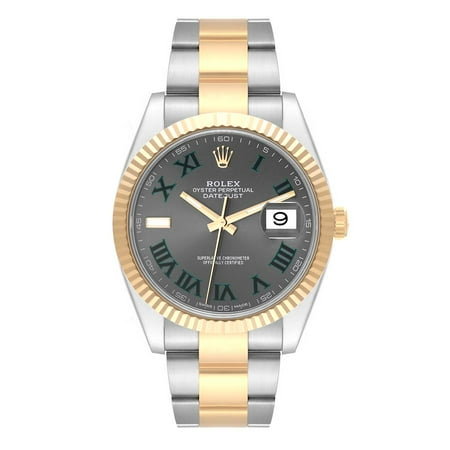
The classic President bracelet is a specific construction: three rounded links with a hidden clasp that makes the bracelet appear continuous when closed. A Day-Date fitted to an unrelated bracelet is still a Day-Date, but it is not the same configuration. On an older example, stretched links, worn pins, and a clasp that no longer closes securely can matter more to ownership than a polished case or an attractive dial.
Identification therefore requires more than the “President” nickname. Check the reference, bezel style, dial shape, case metal, weekday language, and bracelet. Early models were offered in yellow, pink, and white gold, with smooth or fluted bezels. The Day-Date was produced with up to 26 language options. Those details can narrow the period and reveal a mismatch, although they should not be treated as proof without supporting documentation.
Movement changes are equally important. Caliber 3155 brought independent adjustment of the day and date displays, while later updates included a Parachrom hairspring and tighter Superlative Chronometer regulation in 2015. When considering a watch, verify that the stated caliber matches the reference, test both calendar changes, and ask for credible service history. Prioritize originality, bracelet and clasp integrity, and documented maintenance over a celebrity association or nickname.
Rolex currently offers the Day-Date in 36mm and 40mm sizes and in yellow gold, pink gold, white gold, and platinum. That range does not mean every dial, bezel, or configuration is available in every size or metal, so confirm the exact combination rather than generalizing from the collection.
Common Misconceptions About the Rolex Day-Date
Several persistent myths obscure what the Day-Date actually is. “President” is not the official name of every watch in the line: it more precisely refers to the distinctive rounded three-link bracelet commonly fitted to the Day-Date. The watch itself is the Day-Date.
Nor was the model created specifically for presidents. Rolex commercially introduced the Day-Date in 1956. Its political reputation came later, as several U.S. presidents and other world leaders were seen wearing it; Lyndon B. Johnson is often credited with originating the nickname. That is an association, not the model’s original purpose.
| Common shorthand | What the record supports |
|---|---|
| “Every Day-Date sets the same way.” | Pre-quick-set examples require a different procedure. Caliber 3055 added a quick-set date in the late 1970s, while Caliber 3155 introduced independent quick-setting for both day and date. Check Rolex’s instructions for the caliber in the watch rather than relying on a generic guide. |
| “An auction record proves investment performance.” | Jack Nicklaus’s ref. 1803 sold for $1.22 million in 2019, and the “Big Kahuna” sold for $507,000 at Phillips. These are exceptional results shaped by provenance, rarity, and auction context—not normal expectations for every Day-Date. |
Language is not merely cosmetic. Rolex initially offered 11 languages and later reached 26, including Chinese, Japanese, Russian, and Arabic. The day wheel can therefore help identify regional or period-specific examples and may affect collector interest.
Finally, modern Day-Dates are not one universal size or material: Rolex offers 36mm and 40mm versions in yellow gold, pink gold, white gold, and platinum. A sound rolex day date guide must distinguish those categories instead of treating the entire collection as a single watch.

Frequently Asked Questions
What exactly is the “President” — the bracelet, the watch, or both?
The Rolex Day-Date is the watch: Rolex’s full-calendar model with the weekday at 12 o’clock and the date at 3 o’clock. “President” more precisely describes the distinctive three-link, rounded-link bracelet commonly fitted to it, including its concealed clasp. The nickname is also widely used for the complete watch, partly because several US presidents and other world leaders have worn Day-Dates.
When was the Rolex Day-Date first introduced, and who is credited with its day-and-date mechanism?
Rolex commercially introduced the Day-Date in 1956 with references 6510 and 6511, initially in precious metals. The mechanism was described in Swiss patent CH322341A of 1955, credited to Marc Huguenin; a related Swiss patent had been filed in 1950. Reference 6611 followed after about a year and used a chronometer-certified movement.
Which references and calibers introduced the Day-Date’s key quick-set functions?
Early Day-Dates, including reference 1803, used non-quick-set movements. In 1978, reference 18038 introduced Caliber 3055 and a quick-set date function. The later reference 18200, introduced in 1988 with Caliber 3155, brought the first double quick-set system, allowing the day and date to be adjusted independently through the crown.
What sizes and precious metals does Rolex currently offer for the Day-Date?
The current Day-Date range is offered in 36mm and 40mm sizes. Rolex lists yellow gold, pink gold, white gold, and platinum as the available precious metals. The precise dial, bezel, and gem-setting combinations vary by reference, so buyers should confirm the specification for the particular watch rather than assuming that every material or configuration is available in both sizes.
How has the Day-Date evolved aesthetically over time?
Early Day-Dates used acrylic crystals and included pie-pan dials, whose edges slope downward; the 1800 series remained the final Day-Date family with that classical dial form until 1978. Reference 18038 moved to a sapphire crystal and flatter dial. Bezels were offered in domed or fluted forms from the beginning, while later bracelet designs also changed, including the flatter, more angular Oysterquartz arrangement.
How many languages can the Day-Date display, and why does the language matter to collectors?
The Day-Date was initially offered in 11 languages and, at its peak, in 26, including English, French, German, Italian, Chinese, Japanese, Russian, and Arabic. Language matters because the weekday disc is part of a watch’s identity and can help collectors assess its originality, regional character, and desirability. Buyers should verify that the displayed language suits the watch’s documented specification.
Key Takeaways: Read the Watch, Not Just the Nickname
The most useful way to read a Day-Date is to separate the model from its nickname. The Day-Date is the watch; “President” most precisely identifies the distinctive bracelet commonly fitted to it, although everyday usage often means the complete watch. The bracelet’s hidden clasp is part of its visual identity, but it should not replace an examination of the case, movement, dial, and period-correct details.
For a practical rolex day date guide, three milestones provide a reliable starting point: the model’s commercial introduction in 1956, the late-1970s 18038 and its Caliber 3055 with quick-set date, and the 18200, introduced in 1988 with Caliber 3155 and independent quick-setting for both day and date. Those changes affect both historical interest and daily setting.
Identify the reference first, then assess the caliber, crystal, dial, day-language disc, bracelet condition, and provenance. These details usually tell you more about a watch’s originality and significance than celebrity shorthand. Setting instructions must follow the movement: a pre-quickset example should not be handled like an 18038, and a double-quickset 18200 has a different procedure again. Auction results can be instructive, but sales such as the $1.22 million Nicklaus watch describe exceptional, documented examples—not a general investment forecast.