


As an Amazon Associate, we earn from qualifying purchases. We may also earn a commission from other retailers linked on this page, at no extra cost to you.
The central choice in the Rolex Datejust vs Oyster Perpetual comparison is function and visual character, not basic daily-wear capability. Choose the Datejust if you want a date display, Rolex’s Cyclops magnifier, a broader dress-watch identity, and the option of a Jubilee bracelet. The Cyclops lens magnifies the date at 3 o’clock, while the Jubilee is the classic Datejust bracelet, with an Oyster bracelet also available.
The Oyster Perpetual is the more straightforward choice for readers who prefer a cleaner, time-only watch; its Caliber 3230 contrasts with the Datejust’s date-equipped Caliber 3235. The Datejust also carries greater historical weight: introduced in 1945, it was the first automatic wristwatch with an automatically changing date window. Before choosing, check the individual reference carefully: exact size, configuration, movement generation, and market price can vary.
The short answer: who should choose each Rolex?
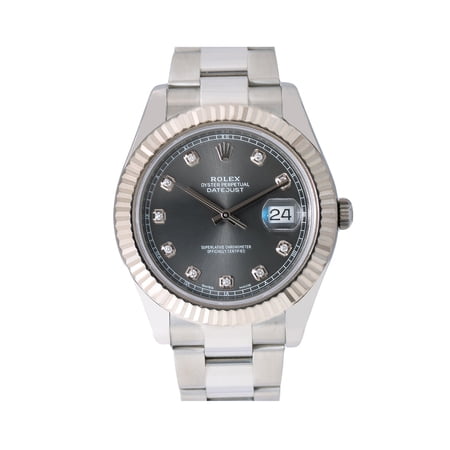
Choose the Datejust if you regularly use a date display or want Rolex’s most recognizable dressier combination: the date at three o’clock, its Cyclops magnifier, and the classic Jubilee bracelet. The Cyclops was introduced on the Datejust in 1955, while the Jubilee remains its signature bracelet pairing, although an Oyster bracelet is also available.
Choose the Oyster Perpetual if your priority is a restrained dial and uncomplicated everyday wear. Its Caliber 3230 is a no-date movement, compared with the Datejust’s Caliber 3235 with a date complication.
Both lines are associated with Rolex’s Oyster-case approach to water resistance. The supplied research confirms the Datejust’s Oyster case and 100-meter resistance, but it does not verify every specification of every current Oyster Perpetual.
Specifications compared: Datejust vs Oyster Perpetual
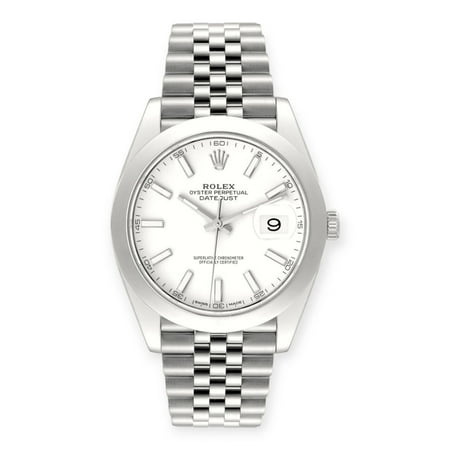
For the rolex datejust vs oyster perpetual decision, the clearest dividing line is the calendar. The Datejust is a time-and-date watch: modern Datejusts place the date at 3 o’clock and use a Cyclops crystal to magnify it. The Oyster Perpetual is time-only, so it has no date function and no Cyclops lens in the comparison discussed here.
| Specification | Datejust | Oyster Perpetual |
|---|---|---|
| Display | Hours, minutes, seconds and date; Cyclops magnifier | Hours, minutes and seconds; no date or Cyclops lens |
| Size context | 16200-family models are 36mm; Datejust II introduced 41mm in 2009, and Datejust 41 was unveiled in 2016. | The cited comparison examines a 41mm example. |
| Movement | Caliber 3135 is associated with the researched modern 36mm Datejust and offers about 50 hours of power reserve. The cited 41mm comparison uses Caliber 3235. | The cited 41mm comparison uses Caliber 3230; its power-reserve figure is not confirmed by the supplied research. |
| Case and water resistance | The Oyster case and Twinlock crown are rated to 100m (10 bar) in the cited material. | Model-generation-specific case and water-resistance details require verification. |
The 41mm comparison concerns the Datejust ref. 126300 and Oyster Perpetual ref. 124300, an entry-level steel pairing. That should not be treated as a specification sheet for every reference or generation. Current retail and secondary-market prices, exact dimensions beyond the cited size context, thickness, lug-to-lug measurements, bracelet availability, and unverified dial or configuration combinations are not established by the supplied research.
Design and wearability: dial, case, and bracelet differences
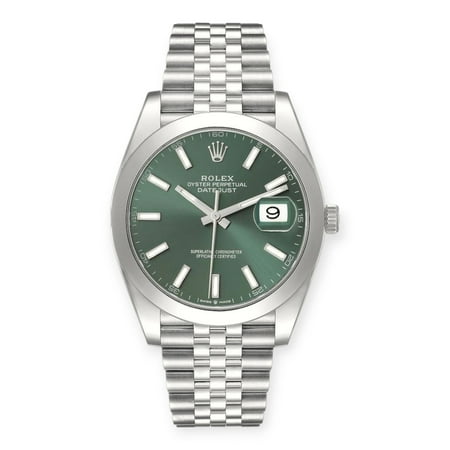
The Datejust has the more immediately formal visual signature. Its date aperture at three o’clock is magnified by the Cyclops crystal, a feature Rolex introduced on the model in 1955. That combination gives the dial a strong focal point and makes the watch recognizable across more conservative or dress-oriented settings. By contrast, the Oyster Perpetual’s time-only layout is quieter: without a date window or magnifier, the dial places greater emphasis on its markers, hands, and color rather than on a calendar display.
Size changes that impression substantially. The 36mm Datejust descends from the original’s proportions, while Rolex introduced the 41mm Datejust II in 2009. In a comparison of the Datejust and Oyster Perpetual, both watches were considered in 41mm, making diameter a presence choice rather than a simple collection distinction. A 36mm case generally presents a more restrained, traditional proportion; 41mm makes the dial and bezel more prominent. Because lug-to-lug length and thickness are not supplied here, verify those measurements for the exact reference before deciding how either size will sit on your wrist.
Bracelet choice reinforces the distinction. The Jubilee is the classic Datejust option, while the Oyster bracelet is an alternative. On the cited Datejust, the three-row 904L stainless-steel bracelet combines polished and satin-finished links. The case middle is also milled from 904L steel. Those alternating surfaces add visual sparkle and a dressier read, while also making marks on polished areas more visible than on uniformly brushed surfaces. The Oyster Perpetual bracelet options are not fully established for every reference in the supplied research, so do not assume the same bracelet matrix across the collection. Luminous hands and markers support legibility on the Datejust, with Chromalight producing an intense blue glow on the cited configuration.
Movement and performance: Caliber 3135, 3235, and 3230
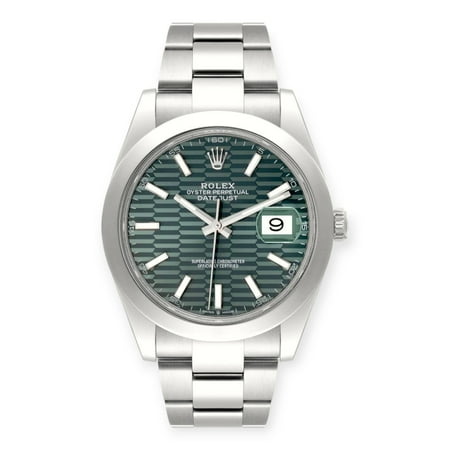
In the cited 41mm comparison, the mechanical difference is straightforward: the Datejust uses Caliber 3235 with a date complication, while the Oyster Perpetual uses Caliber 3230 for time-only indication. That distinction matters beyond the dial. If you regularly need the calendar, the Datejust’s quick date correction makes ownership more convenient: a movable finger in Caliber 3235 allows the date to be reset manually, quickly, and whenever desired.
Caliber 3235 is also a substantial revision of the older Caliber 3135, the movement used in the Datejust since 1988. Rolex reportedly revised or optimized 90 percent of Caliber 3235’s components compared with Caliber 3135. The update includes the Chronergy escapement, which increases Swiss lever escapement efficiency by 15 percent, and a blue Parachrom hairspring made from a niobium-zirconium-oxygen alloy. In practical terms, that architecture is intended to support improvements in rate precision, power reserve, shock resistance, magnetic resistance, adjustment, and reliability.
Rolex’s cited Superlative Chronometer standard requires the movement’s rate after casing to remain within ±2 seconds per day. The tested Datejust recorded measured timing values that did not exceed 1 second per day, but that result is specific to the watch tested—not a promise that every individual watch will produce the same figure.
Caliber 3230 may be the cleaner choice if a date is unnecessary, but the supplied research does not provide a comparable complete specification sheet for it. For the Rolex Datejust vs Oyster Perpetual decision, the defensible conclusion is therefore functional: choose the Datejust for calendar utility and the more extensively documented 3235 upgrade, or the Oyster Perpetual if time-only simplicity is the priority.
Value, ownership, and servicing
Value in the Datejust comes from more than the added calendar. It combines an automatically changing date—an important part of the model’s identity since its 1945 introduction—with the Cyclops magnifier introduced in 1955. The date mechanism and magnified display add everyday utility, while the Datejust’s long history of case, dial, metal, bezel, and bracelet configurations gives buyers more ways to tailor its appearance. That does not, by itself, establish a price premium over an Oyster Perpetual.
Exact current retail and secondary-market prices are not included in the supplied facts. For a meaningful rolex datejust vs oyster perpetual price comparison, match like for like: case size, metal, dial, bezel, bracelet, condition, service history, and original documentation. A simpler no-date configuration may be easier to compare, but the market value of any individual watch depends on its exact specification and provenance.
For daily use, the Oyster case and Twinlock screw-down crown are practical considerations. The cited Datejust specification is rated to 100 meters, or 10 bar. Water resistance should not be treated as permanent, so owners should include appropriate water-resistance checks in responsible maintenance rather than relying indefinitely on the original rating.
Service access is another ownership consideration. The case back requires a special wrench, and the movement cannot be viewed without opening the case. That makes qualified service access more important than the appeal of inspecting the movement at home. On the cited Datejust configuration, the bracelet’s Easylink system can vary its length by up to 6 mm, a useful fit adjustment during the day.
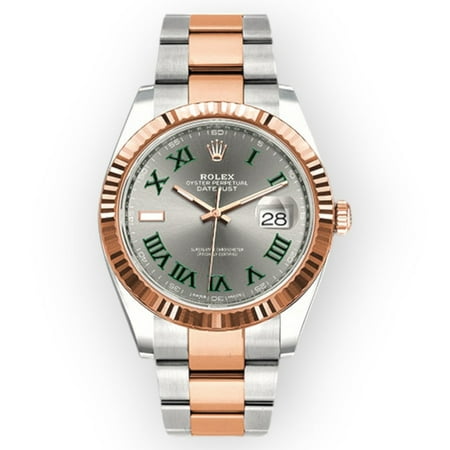
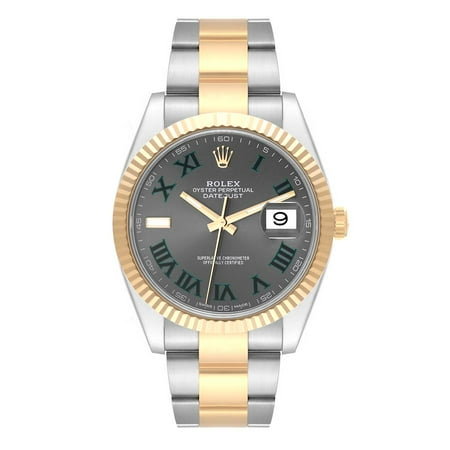
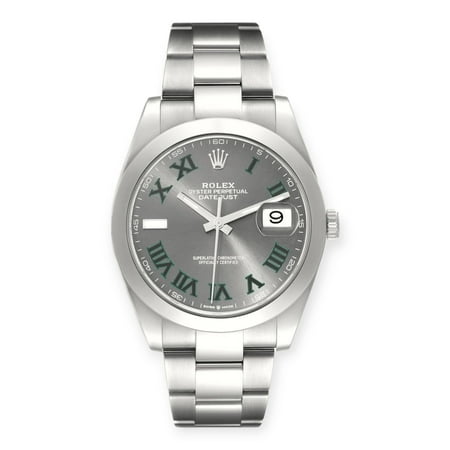
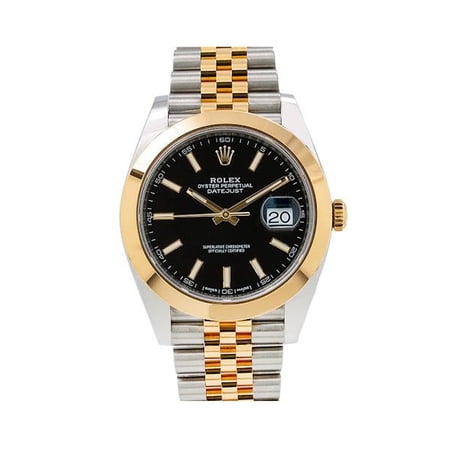
Pros and cons of the Datejust and Oyster Perpetual
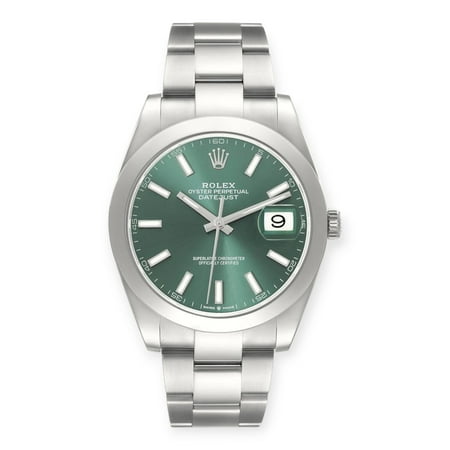
The better choice in a rolex datejust vs oyster perpetual comparison depends on whether added information and visual detail improve the watch for you—or simply add elements you will not use.
Strengths
- Datejust: The date is its practical advantage, while the Cyclops magnifier gives the collection an instantly recognizable identity. Modern Datejusts use the Cyclops at 3 o’clock, and the model’s historical importance is substantial: it was introduced in 1945 and is described as the first automatic wristwatch with an automatically changing date. The Jubilee is its classic bracelet option, with an Oyster bracelet also available. Together, those choices support a character that can move from formal settings to everyday use.
- Oyster Perpetual: Its time-only display makes the concept more direct and visually restrained. In the cited 41mm comparison, it also provides direct access to Caliber 3230, while the Datejust uses Caliber 3235 with a date complication.
Trade-offs
- Datejust: The date aperture, Cyclops, and bracelet choices create more visual complexity. More configurations can also mean greater variation in appearance and price, while buyers who never need a date may prefer not to have the mechanism.
- Oyster Perpetual: There is no date or Cyclops, and its cleaner language offers less of the Datejust’s formal presence. Bracelet and price limitations should be assessed by configuration, not assumed across the collection.
Frequently asked questions
What are the key functional differences between the Rolex Datejust and Oyster Perpetual?
The Datejust adds a date display at three o’clock and Rolex’s Cyclops magnifier, while the Oyster Perpetual is a time-only watch. The distinction is therefore practical as well as visual: the Datejust provides more information and a more formal design signature, while the Oyster Perpetual keeps the dial simpler. Both models belong to Rolex’s Oyster-case tradition.
Does the Oyster Perpetual have a date function or Cyclops lens?
No date function or Cyclops lens is identified for the Oyster Perpetual in the cited comparison. Its Caliber 3230 provides time-only indication, whereas the Datejust uses Caliber 3235 with a date complication. Rolex introduced the Cyclops magnifier on the Datejust in the 1950s, so it is a defining Datejust feature rather than an Oyster Perpetual feature.
How do the Datejust 36 and Oyster Perpetual 36 compare?
At 36mm, the choice is mainly between added calendar functionality and a cleaner dial. The Datejust 36 follows the long-running 36mm Datejust format and includes the date display and Cyclops magnifier. The Oyster Perpetual 36 keeps the time-only layout. Bracelet choice also affects the result: the Jubilee is the classic Datejust option, while an Oyster bracelet gives a more restrained appearance.
How do the Datejust 41 and Oyster Perpetual 41 compare?
Both are available in the 41mm comparison cited, but their functions remain different: the Datejust 41 uses Caliber 3235 with a date complication, while the Oyster Perpetual 41 uses Caliber 3230 for time-only indication. The Datejust 41 was unveiled in 2016. Choose between them based first on whether you want a date and Cyclops lens, then on the dial and bracelet style.
Which movements do the Datejust and Oyster Perpetual use, and how do their power reserves and features differ?
The cited 41mm comparison identifies Caliber 3235 in the Datejust and Caliber 3230 in the Oyster Perpetual. Caliber 3235 includes a date complication; Caliber 3230 is used for time-only indication. The supplied facts do not provide a directly comparable power-reserve figure for both movements, so that detail should be checked against the specifications of the exact current reference.
Verdict: which Rolex suits you?

Verdict: which Rolex suits you?
There is no universal winner in the rolex datejust vs oyster perpetual comparison. Choose the Datejust if a date display, Cyclops magnifier, and classic Jubilee bracelet are central to its appeal. The Cyclops was introduced on the model in 1955, while the Jubilee remains its classic bracelet option. Its 1945 origin as the first automatic wristwatch with an automatically changing date also gives the collection unusual historical weight.
Choose the Oyster Perpetual if you prefer a time-only dial and a simpler visual language over calendar utility. Collectors should judge the individual watch—not just the collection—by its size, generation, dial, bracelet, and movement. In the modern comparison, the Oyster Perpetual uses Caliber 3230, while the Datejust uses Caliber 3235 with a date complication. Beginners and gift buyers should settle one question first: does the recipient actually want a date?
The Datejust suits buyers who value added functionality, historical character, and a more distinctive visual signature. The Oyster Perpetual is the better fit for those who want a cleaner, more restrained watch.


