


As an Amazon Associate, we earn from qualifying purchases. We may also earn a commission from other retailers linked on this page, at no extra cost to you.
The Seiko 5 Sports SRPD55 is part of Seiko’s SRPD family, a group of value-oriented sports watches that continues the broader SKX007 design legacy. Its proposition is straightforward: an automatic movement with manual winding, a roughly 41-hour power reserve, and a familiar sports-watch format at an accessible level. Seiko specifies a unidirectional rotating bezel and 10 bar of water resistance, while Worn & Wound confirms the 100-meter rating and describes it as suitable for swimming and similar activities. The important qualification is that this is not a true dive watch, despite its SKX-inspired appearance. This seiko 5 sports srpd55 review is therefore a source-based assessment, not Eva Watches hands-on testing: official specifications come from Seiko, while hands-on observations are attributed to Hodinkee, Worn & Wound, and TheTestedHub.
Verdict in Brief: Strong Value, Limited Dive Credentials
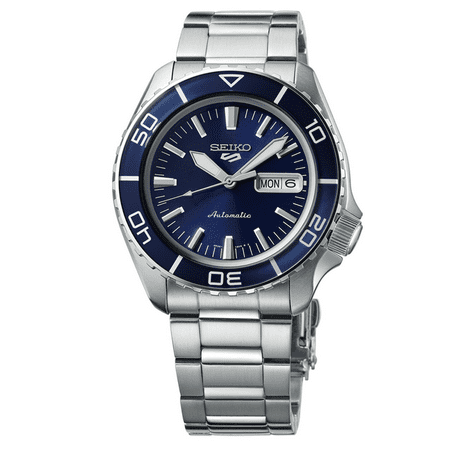
The SRPD55 combines the 4R36 automatic movement with manual winding, a stop-seconds function, and approximately 41 hours of power reserve. LumiBrite and a unidirectional rotating bezel provide useful sports-watch features, while the stainless-steel case measures 42.5mm in diameter and 46.0mm from lug to lug. Those specifications support its position as an accessible mechanical everyday watch, consistent with Worn & Wound’s assessment of the SRPD line as an attractive, affordable entry into mechanical watches.
The compromises are equally important. The watch uses Hardlex rather than sapphire, is rated to 100 meters, and does not have a screw-down crown. That makes it a sports watch with useful water resistance, but not a direct replacement for a professional dive watch; Hodinkee likewise characterized the new Seiko 5 as not being a true dive watch. In short, this Seiko 5 Sports SRPD55 review finds the model most convincing as an accessible mechanical daily wearer, provided its limitations are understood.
Design and Build: An SKX-Inspired Sports Watch with Its Own Trade-Offs

The SRPD55 uses a stainless-steel case measuring 42.5mm in diameter, 13.4mm thick, and 46mm from lug to lug. Its 22mm lug spacing gives the watch a broad, contemporary sports-watch stance, while keeping the case proportions closely aligned with the established SRPD format.
The black dial follows a practical sports-watch layout, with a day-date display at 3 o’clock and a unidirectional rotating bezel. The base SRPD dial uses applied indices filled with Seiko’s LumiBrite, rather than the printed indices used on the SKX, according to Worn & Wound. That change gives the dial a more dimensional appearance; Hodinkee’s review also describes the lume as strong despite the restrained branding and dial text.
The crystal is Hardlex mineral glass, a deliberate compromise rather than an unqualified upgrade. Worn & Wound reports that it offers greater shatter resistance than sapphire, but is more susceptible to scratches. For an everyday sports watch, that trade-off favors impact tolerance, though owners who prioritize long-term scratch resistance may prefer sapphire in another model.
Seiko pairs the case with a three-fold clasp featuring a secure lock and push-button release. The see-through, screw-down case back is another notable choice: it reveals the movement and gives the watch a more accessible, mechanical character than a traditional solid dive-watch back. The display window is useful for viewing the mechanism, but it also moves the design away from the purely tool-oriented convention associated with older dive watches.
Worn & Wound describes the SRPD line as using the same case size and design as the previous-generation SKX models. That supports the watch’s close relationship to the SKX legacy without making the SRPD55 a direct replacement. The differences are consequential: applied luminous indices and a display back give this Seiko 5 Sports model a more decorative, everyday-sports personality, while the Hardlex crystal preserves a cost-conscious specification. In this Seiko 5 Sports SRPD55 review, the case is best understood as a familiar SKX-derived foundation with a different set of priorities.
Movement and Performance: What the 4R36 Delivers

At the center of the SRPD55 is Seiko’s 4R36 automatic movement, which also supports manual winding. Its stop-second, or hacking, function stops the seconds hand when the crown is pulled out, allowing more precise time-setting. Together, these controls improve on the older 7S26: the wearer can add power through the crown and synchronize the seconds display when setting the watch.
Seiko specifies an approximately 41-hour power reserve. That means a fully wound watch should run for roughly a day and a half when left off the wrist, although the actual result varies with the individual movement and its winding state. TheTestedHub measured about 39 hours in its longer-term review, slightly below the stated figure. That result applies to the reviewed example and should not be treated as a revised specification for every SRPD55.
The 4R36 also provides a day/date display at 3 o’clock and uses 24 jewels, according to Worn & Wound. For everyday ownership, that adds useful calendar information without changing the movement’s basic operation.
Its stated accuracy range is plus 45 to minus 35 seconds per day. This is a broad mechanical-watch tolerance, not a promise that every SRPD55 will perform at either extreme or maintain the same rate consistently. TheTestedHub reported that its reviewed unit gained 12 seconds per day, within that stated range. That observation is specific to the tested example and should not be generalized to every watch.
Overall, the 4R36 offers practical functionality at the entry-level end of mechanical-watch performance. Its reserve and rate can vary, but manual winding and hacking make daily ownership more convenient than with the 7S26. Its appeal is therefore less about chronometer-like precision than about accessible mechanical operation with useful setting controls.
Wearability and Daily Use: Familiar Proportions with a Broad Wrist Presence
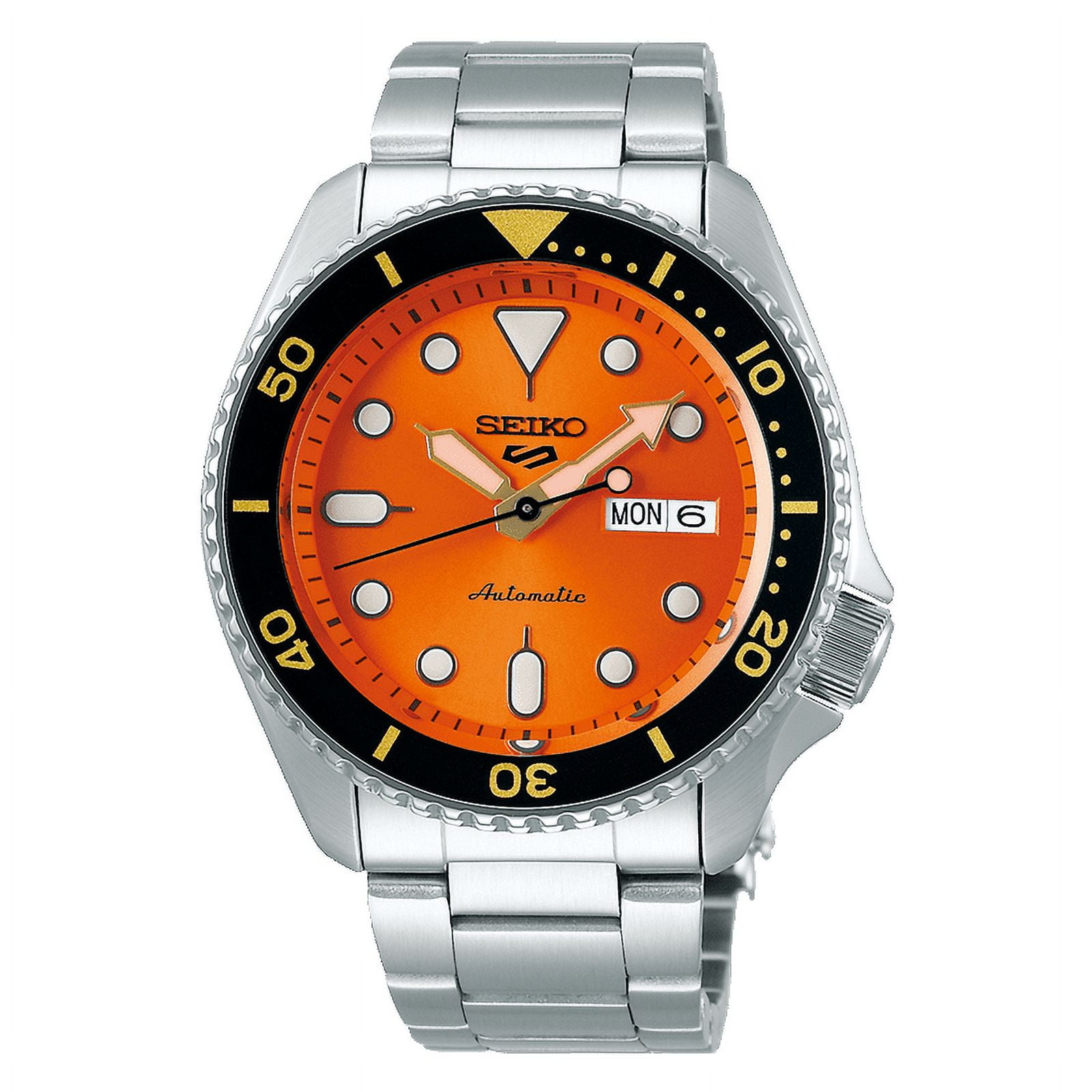
The SRPD55’s reported dimensions give it a noticeable wrist presence: the case measures 42.5mm across, 46mm lug-to-lug, and 13.4mm thick. The relatively compact lug-to-lug figure may help it sit more neatly than the diameter alone suggests, but the combination of width and thickness means it should not be treated as a universal fit. Worn & Wound’s writer described the wrist experience in warmly familiar terms, comparing the feeling of putting the SRPD on to catching up with an old friend. That is a useful impression of familiarity, not a guarantee of comfort on every wrist.
Legibility is supported by the straightforward sports-watch layout, while Seiko specifies LumiBrite on the hands and indexes. Hodinkee was particularly positive about the lume’s brightness and longevity, an assessment that is distinct from the manufacturer’s material specification. Those properties make the watch practical in changing light, although the cited opinion remains a reviewer’s observation rather than a standardized measurement.
Seiko documents 10-bar water resistance, equivalent to 100 meters, and Worn & Wound describes that rating as suitable for swimming and similar activities. The same review points to the lower resistance and absence of a screw-down crown as drawbacks relative to the preceding diver, so this is better understood as a sports watch than a true dive watch. The display, screw-down case back is a practical compromise: it allows the movement to be seen, but the push-down crown and 100-meter rating place limits on its dive-watch credentials.
Alternatives: SRPD55 vs. the SKX007 and Other Entry-Level Automatics
The SRPD55 preserves the previous SKX case design and dimensions, but its specification changes the buying proposition. The 4R36 adds hand-winding and hacking, functions absent from the older 7S26, while the case is rated to 100 meters rather than being presented as the same dive-watch package.
| Model or family | Movement | Water resistance | Crown or bezel | Case dimensions | Crystal |
|---|---|---|---|---|---|
| SRPD55 / SRPD family | 4R36; hand-winding and hacking | 100 m | Push-down crown; unidirectional bezel | 42.5 × 46 mm; 13.4 mm thick | Hardlex |
| SKX007 | Older 7S26; hand-winding and hacking not documented here | Not confirmed in the supplied research | Not confirmed in the supplied research | Same case size and design relationship reported | Not confirmed in the supplied research |
Those changes explain why the SRPD55 is better suited to buyers who value convenient daily operation and a display back: the case back reveals the movement. They also explain why it should not be called a direct SKX replacement. Worn & Wound’s assessment is that the SRPD models come close, but are not a direct replacement for the discontinued SKX line. For this seiko 5 sports srpd55 review, the practical takeaway is simple: choose the SRPD55 as an SKX-inspired everyday automatic, not as an equivalent dive watch.
Pros and Cons of the Seiko 5 Sports SRPD55
A balanced assessment should distinguish everyday value from dive-watch capability. The SRPD55 is a persuasive entry point to mechanical watches, but its compromises are clear.
Strengths
- Accessible mechanical-watch positioning, with the 4R36 automatic movement, manual winding, stop-seconds function, and approximately 41-hour power reserve.
- Useful everyday specification: LumiBrite on the hands and indexes, 10-bar water resistance, and a three-fold clasp with a secure lock and push-button release.
- The familiar sports-watch case design and see-through case back make it approachable, while Hodinkee reported that the lume is bright and long-lasting.
Trade-offs
- Hardlex is more shatter-resistant than sapphire but can be more prone to scratches, according to Worn & Wound.
- The absence of a screw-down crown and the reduced water resistance compared with the older diver-oriented format limit its dive-watch credentials.
- The published accuracy range is broad, at plus 45 to minus 35 seconds per day, and the 42.5mm case may not suit buyers seeking compact proportions.
Where to Buy
No affiliate products or verified retailer placements are available in the supplied product database. The listed pick is the 5 Sports 24-Jewel Automatic Watch – Stainless Steel SRPD55, suited to readers specifically seeking a Seiko automatic watch. Historical, source-reported pricing placed SRPD models at a starting MSRP of $295 in 2020, with lower retail prices mentioned at the time; this should not be treated as a current price or indication of availability.
Prices and availability are accurate as of the date/time indicated and are subject to change.
Frequently Asked Questions
What movement does the Seiko 5 Sports SRPD55 use, and how accurate is it?
The SRPD55 uses Seiko’s 4R36 automatic movement, which also supports manual winding and a stop-seconds function for more precise setting. It has a day/date display and 24 jewels. Seiko’s stated accuracy range is +45/-35 seconds per day, while the rated power reserve is approximately 41 hours. Individual results can vary, so treat that range as the relevant specification rather than a guarantee of daily performance.
What are the SRPD55’s case dimensions, and how does it wear?
The stainless-steel case measures 42.5mm in diameter, 13.4mm thick, and 46mm from lug to lug, with 22mm spacing between the lugs. Those dimensions give the watch a broad, contemporary sports-watch presence, while the 46mm lug-to-lug measurement may help it sit more compactly than its diameter suggests. Wrist shape and preference still matter, particularly because the case is relatively thick.
Is the SRPD55 water resistant enough for swimming, and is it a true dive watch?
The SRPD55 is rated to 10 bar, or 100 meters, and is described as suitable for swimming and similar activities. It has a unidirectional rotating bezel, but the SRPD series uses a push-down crown rather than a screw-down crown. Those details matter: the watch offers useful sports-watch water resistance, but it should not be treated as a direct substitute for a purpose-built, ISO-rated dive watch.
What lume, crystal, and case materials does the SRPD55 use?
The case is stainless steel, and Seiko specifies LumiBrite on the hands and indices. A unidirectional bezel supports elapsed-time reading, while reported coverage describes the lume as strong and long-lasting. The SRPD series uses Seiko Hardlex mineral crystal, which is generally presented as more shatter-resistant than sapphire but more prone to scratches. The bracelet uses a three-fold clasp with a secure lock and push-button release.
How does the SRPD55 compare with the older SKX007 and other entry-level automatics?
The SRPD55 retains the SKX family’s case design and dimensions, but changes the specification and intended use. Its 4R36 adds manual winding and hacking, functions absent from the older 7S26, while the SRPD’s 100-meter rating and push-down crown limit its dive-watch credentials. Its appeal is therefore as an accessible everyday automatic: more versatile than a basic mechanical watch, but not a replacement for a dedicated diver.
Final Verdict: Who Should Buy the SRPD55?
Final Verdict: Who Should Buy the SRPD55?
For buyers seeking an accessible automatic sports watch rather than a true dive watch, the SRPD55 makes a practical case. Its 4R36 movement provides automatic and manual winding, hacking, and approximately 41 hours of power reserve. Reported strong LumiBrite and 100-meter water resistance support everyday use, including swimming.
The trade-off is important. The SRPD55’s value depends on accepting the movement’s broad accuracy specification, a Hardlex crystal, and reduced dive credentials compared with the SKX007 generation. Its 42.5mm diameter, 13.4mm thickness, and 46mm lug-to-lug measurement also make it a poor fit for buyers specifically seeking compact case proportions. The lack of a screw-down crown and true dive-watch capability are likewise reasons to choose another model.
For a beginner, gift buyer, or collector seeking a straightforward entry into mechanical watches, that balance remains compelling. Readers who want a deeper comparison with the predecessor should continue to our existing Seiko SKX007 review; it examines that relationship without changing the central takeaway here.


