

As an Amazon Associate, we earn from qualifying purchases. We may also earn a commission from other retailers linked on this page, at no extra cost to you.
Introduction: What the Casio Duro MDV106 Is
The Casio Duro MDV106 occupies a clearly defined place in Casio’s catalog: an affordable quartz diver built around practical water resistance rather than dress-watch styling. The Duro is described as offering a 200-meter water-resistance rating, a screw-down crown, a quartz movement, and a clean, legible dial. Casio’s Marlin logo has also been used since 2004 to identify watches tested to 200 meters of water resistance. Those details explain why the MDV106 is generally discussed as a straightforward tool watch rather than a formal or primarily decorative model.
Its reputation extends beyond the specification sheet. Casio reported worldwide sales of 600,000 watches from the MDV106 series between its June 2011 release and 2021. A WatchUSeek search produced 485 pages of results, while the #CasioDuro hashtag had been used more than 5,000 times on Instagram. Other coverage has described the Duro as a cult phenomenon whose following reaches beyond casual buyers. These signals support calling the MDV106 a widely recognized budget diver with a substantial enthusiast following, while avoiding the assumption that popularity alone proves quality or suitability for every owner.
This casio duro mdv106 review uses the published specifications and source-based descriptions to establish what the watch is and why it has attracted attention. The available material identifies its 200-meter rating, screw-down crown, quartz movement, and legible dial, but those details do not by themselves establish comfort, finishing, or performance in a particular use. Those questions are therefore kept distinct from the documented specifications and reported commentary that follow.
Verdict in Brief
Verdict in Brief
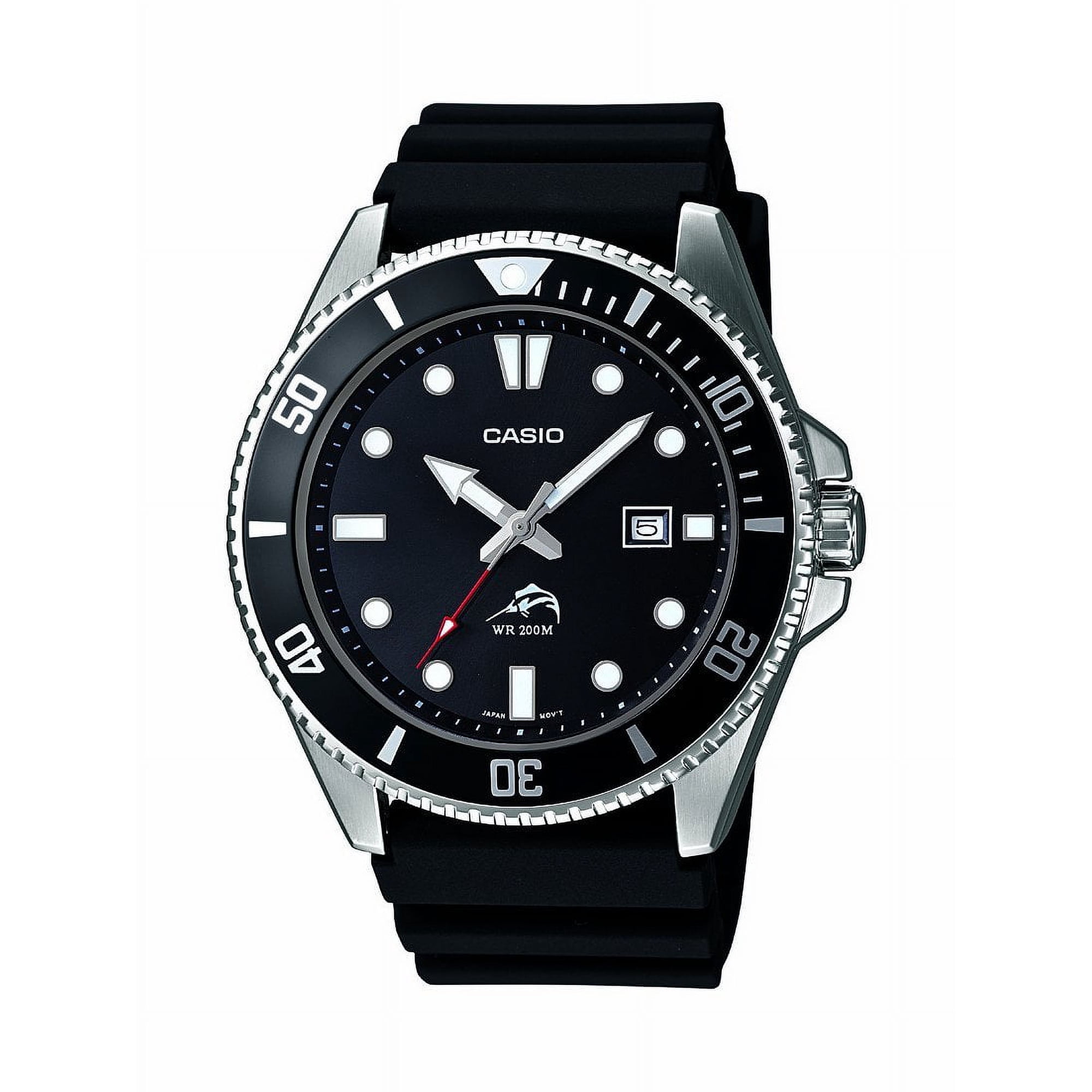
The Casio Duro MDV106 is best understood as a simple quartz watch with a substantial water-resistance rating and a recognizable diver-style design. Published sources list quartz timekeeping and 200 m of water resistance, while another account describes a screw-down crown and a clean, legible dial. Casio publishes the case dimensions as 48.5 by 44.2 by 12.1 mm, measurements that deserve attention from buyers who prefer a more compact watch.
That practical specification comes with clear compromises. The MDV106 uses a mineral crystal rather than a more scratch-resistant crystal type. Lume is the most frequently reported weakness in the available commentary. One published account says that the lume starts fading almost immediately and becomes nearly invisible within a few minutes; that is an individual observation, not a standardized result that can be assumed for every example. Small Seconds reports that Casio states the watch has no ISO certification.
The Duro’s following is supported by more than general enthusiasm. Casio said the MDV106 series had sold 600,000 units worldwide since its first release in June 2011. Hodinkee also reported 485 pages of WatchUSeek results and more than 5,000 uses of the #CasioDuro hashtag on Instagram. Those figures help explain the model’s visibility, but they do not change the trade-offs in its construction or night legibility.
Price is not a fixed benchmark across markets. Reported figures include a $69.95 MSRP and an approximately €89 listing, while broader reporting indicates that regional pricing and retailer markdowns account for variation. Check the current asking price in your market rather than relying on an older reference point. This casio duro mdv106 review therefore reaches a qualified verdict: the MDV106 suits buyers seeking quartz simplicity, 200 m water resistance, and an established budget-diver format. It is a weaker fit for anyone who considers a mineral crystal, limited or inconsistent lume performance, or the absence of ISO certification a decisive drawback.
Design and Build: A Straightforward Tool-Watch Formula
Design and Build: A Straightforward Tool-Watch Formula
The MDV106’s proportions are documented in more than one way, so its published dimensions should be read as reference points rather than a single definitive measurement set. Casio gives the case as 48.5 × 44.2 × 12.1 mm, while another source lists the width as 44 mm and the thickness as 12 mm. The difference is small on paper, but it is worth keeping in mind when comparing the watch with other cases or considering how its dimensions may translate to wrist presence.
The same caution applies to the distance from one lug tip to the other. One source reports 48 mm, while another gives 48.5 mm. Casio’s cited product information does not publish a lug-width measurement. A 22 mm lug width appears in one source, but the available documentation does not independently confirm it.
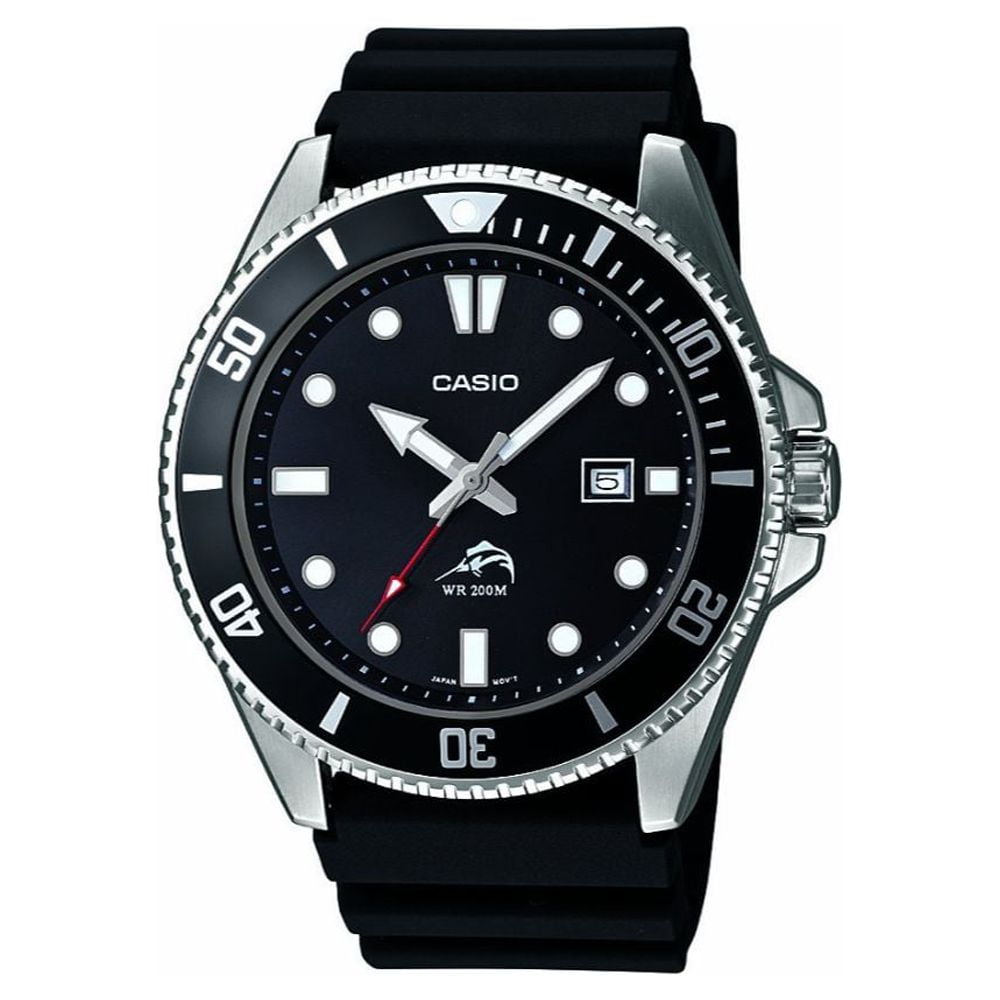
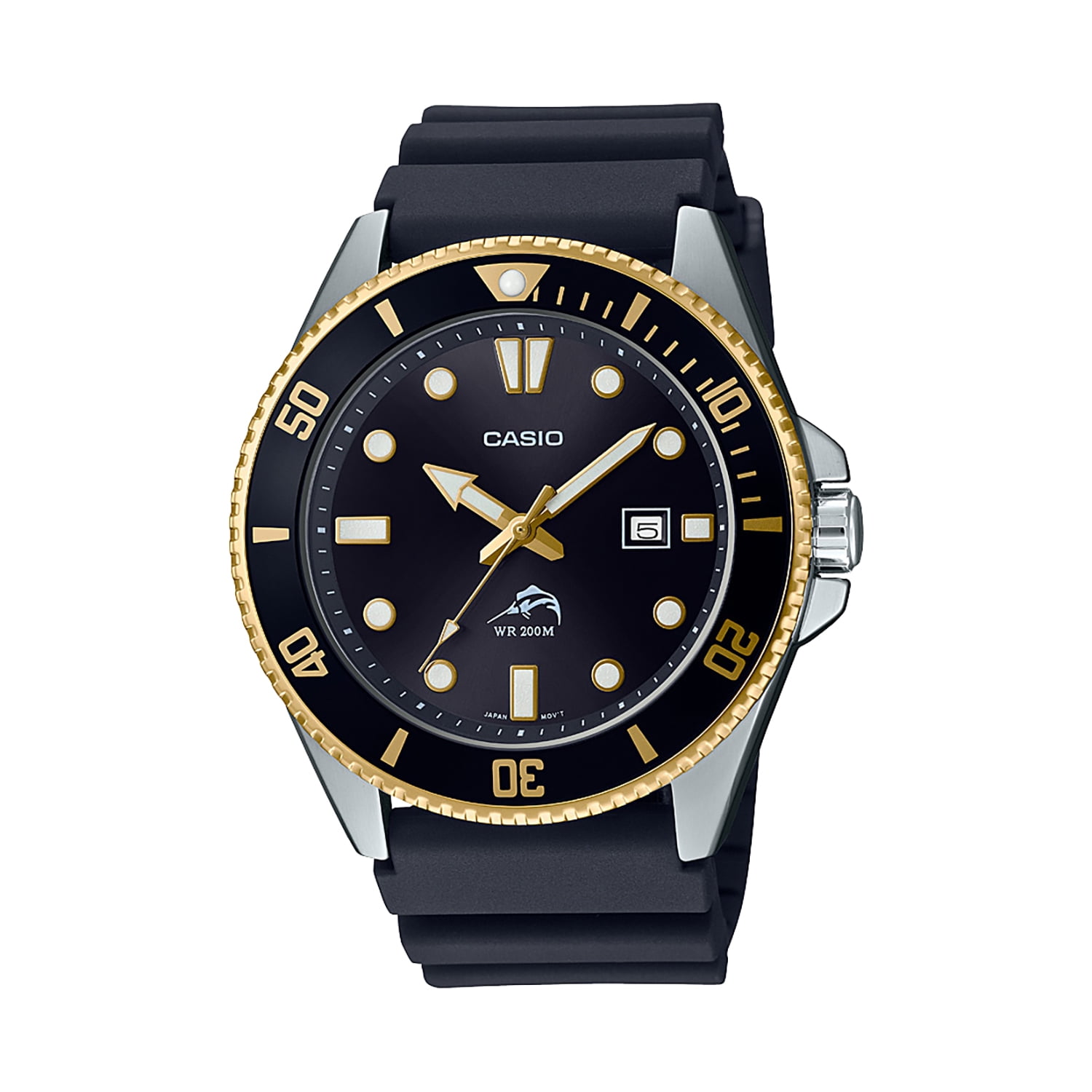
Its construction follows a conventional tool-watch specification. The case is described as stainless steel, using both brushed and polished surfaces, and the crystal is reported as hardened mineral glass. The watch is supplied on a black rubber strap. A screw-down crown is also reported, although that detail comes from a source other than the cited Casio product information. The caseback is described as a screw-down design engraved with a marlin in the same posture as the emblem on the dial.
Dial details keep the design restrained. The black dial has a sunburst finish that can appear almost gray in bright light. Applied circular hour markers and the hour, minute, and seconds hands are reported to contain luminous material. The seconds hand is tipped in red, while a marlin emblem appears above six o’clock. The repeated marlin motif gives the dial and caseback a clear visual connection without adding unnecessary decoration.
The bezel provides the clearest diver-specific element. It is reported as unidirectional, with 120 clicks and a luminous marker at the zero position. Its material is not fully settled in the available documentation: one source describes it as aluminum, while the operating details are reported separately by another source without establishing the material to the same degree. The bezel’s function can therefore be described with more confidence than its construction.
Casio’s Marlin emblem also carries a specific meaning within the brand’s range. Casio has used the logo since 2004 to identify watches tested to 200 meters of water resistance. The MDV106 is listed with 200 m water resistance, and the available documentation states that it has no ISO certification. That distinction matters: the emblem supports Casio’s stated water-resistance testing, but it is not evidence that the watch carries ISO 6425 certification.
Movement and Performance: Quartz Simplicity, Limited Documentation
Movement and Performance: Quartz Simplicity, Limited Documentation
The MDV106 uses a Casio quartz movement identified in published sources as Module 2784. That number appears on the case back and in the watch manual, but the available product information does not offer much additional detail about the movement’s construction or architecture.
What is documented is a straightforward battery-powered specification. One published listing identifies an SR626SW cell, gives an expected battery life of three years, and rates the movement’s accuracy at ±20 seconds per month. The figures are stated specifications rather than a guarantee that every individual watch will maintain the same rate for the entire battery interval. The available sources do not provide a fuller service schedule or more detailed technical information for Module 2784.
That simplicity is central to the Duro’s proposition. Review coverage describes its quartz movement as reliable, while another source recommends the watch as a budget-friendly beater or gift. In practical terms, the documented setup consists of quartz timekeeping and a replaceable battery, rather than a more extensively described mechanical caliber. The limited movement documentation therefore restricts what can be said about the caliber beyond its identification, power source, stated accuracy, and expected battery life.
Water resistance is listed at 200 m. Casio has used the Marlin logo to indicate watches tested to 200 m of water resistance, and published coverage treats the rating and logo as evidence of the Duro’s intended role as a water-resistant diver rather than a dress watch. That positioning should not be read as ISO certification: a published source states that Casio does not claim ISO certification for this model.
The clearest reported weakness is not the quartz movement but nighttime legibility. Lume is described as the most common complaint associated with the Duro, with one review reporting that it begins to fade almost immediately and becomes nearly invisible within a few minutes. Sustained illumination after dark is therefore a documented limitation to consider alongside the otherwise clearly stated quartz movement and 200 m water-resistance specifications.
Wearability and Daily Use: What the Published Evidence Suggests
Wearability and Daily Use: What the Published Evidence Suggests
The published measurements point to a watch with a noticeable, rather than compact, presence. Casio lists the case at 48.5 mm by 44.2 mm by 12.1 mm, while another published source gives approximately 44 mm in width, 12 mm in thickness, and 48 mm from lug to lug. A separate listing gives the lug-to-lug measurement as 48.5 mm. In practical terms, those figures describe a case around 44–44.2 mm wide, roughly 12–12.1 mm thick, and approximately 48–48.5 mm from lug to lug. That combination is more likely to read as a prominent everyday watch than a low-profile option, although the exact impression will vary with wrist shape and the way the lugs sit.
The available measurements also offer useful guidance for strap changes, but not complete certainty. One source lists a 22 mm lug width and identifies the supplied strap as black rubber. However, another source says that Casio does not provide a lug-width measurement on the relevant product page. The 22 mm figure is therefore best treated as a published reference rather than an unquestionable fit specification. Anyone buying a replacement strap should verify the spacing on the individual watch before ordering.
Published commentary places the Duro in the budget-beater category. One reviewer described it as the strongest timepiece he had tested below $50 and among the three best below $100, then recommended it as a budget-friendly beater or gift. Those are the reviewer’s judgments, not a guarantee of service life or comfort. A more measured reading is that the documented dimensions and value-oriented positioning make the Duro a plausible daily-use quartz watch for someone who accepts a fairly prominent case; whether it feels comfortable over a full day remains dependent on the wearer and fit.
Its published water-resistance figure supports a broad recreational-use role: the Duro is listed at 200 m of water resistance. At the same time, Casio is reported as stating that the model has no ISO certification. The distinction matters: the rating should not be presented as evidence that the watch is a certified professional dive instrument. Low-light performance is another documented compromise. One source identifies lume as the model’s most common complaint, stating that it begins fading almost immediately and becomes nearly invisible within a few minutes. For daily use, the resulting picture is specific: substantial published dimensions, a stock rubber strap, strong stated water resistance, and a reported limitation in lume persistence.
Alternatives: How the Duro Fits the Budget-Diver Field

Alternatives: How the Duro Fits the Budget-Diver Field
A useful alternative to the Casio Duro MDV106 should be judged against a defined reference point, not against its appearance or a low advertised price. The available research does not provide verified specifications for named competing watches, so it cannot support a model-by-model ranking. It does, however, establish a practical checklist for comparing any sub-$200 dive-watch candidate with the Duro.
Start with the core specification
For this comparison, the Duro’s baseline is a quartz watch using Casio’s 2784 module, with 200 m of water resistance and a mineral crystal. Casio publishes dimensions of 48.5 × 44.2 × 12.1 mm. Those figures give readers something concrete to test against an alternative, while also showing why a single diameter figure is not enough to predict how a watch will fit.
| Comparison point | Casio Duro MDV106 baseline | What is established about alternatives | What to verify |
|---|---|---|---|
| Movement | Quartz; one source identifies Casio’s 2784 module. | No verified competitor movement specifications are supplied. | Whether the alternative uses quartz or an automatic movement, and what that implies for battery replacement or servicing. |
| Water resistance | Listed at 200 m. | No verified competitor ratings are supplied. | The manufacturer’s stated rating and the supporting wording. A rotating bezel or dive-watch styling does not establish water resistance by itself. |
| Crystal | Mineral crystal. | No verified competitor crystal materials are supplied. | Whether the specification names mineral, sapphire, or another material. This is a distinct consideration from water resistance. |
| Case dimensions | 48.5 × 44.2 × 12.1 mm in Casio’s published dimensions. | No verified competitor measurements are supplied. | Diameter, thickness, and any other published measurements relevant to fit. Diameter alone does not describe the complete case. |
| Price evidence | Sources report approximately $44, $50, $69.95, $85, and €89. | No verified competitor prices are supplied. | Currency, retailer, date, and whether the figure is a listed price, a purchase price, or a markdown. |
Separate branding from verification
The Marlin logo can provide useful context, but it is not a substitute for an alternative’s specification sheet. Casio has used the logo since 2004 to indicate watches tested to 200 m of water resistance. For another watch, confirm the rating through relevant brand or retailer information and distinguish a formal specification from informal seller language.
The same discipline applies to price. The reported Duro figures come from different sources and regions, and the variation is attributed to regional pricing and retailer markdowns rather than one universal price. They are therefore source-specific reference points, not a guaranteed current price. In a casio duro mdv106 review, the most defensible conclusion is that the MDV106 provides a clear comparison baseline; calling another budget diver better or worse requires verified facts for that particular model.
Pros and Cons
This source-based overview focuses on the Casio Duro MDV106’s practical specifications and uncomplicated ownership, while its limitations are typical of an inexpensive quartz diver.
Strengths
- A documented 200 m water-resistance rating and screw-down crown provide a credible foundation for water-oriented use.
- The simple quartz movement keeps the proposition straightforward, while the recognizable Marlin logo connects the watch with Casio’s 200-meter-tested models.
- Published commentary describes it as a budget-friendly beater or gift, which helps explain its appeal to first-time buyers and practical collectors.
Trade-offs
- Reported lume performance is weak, with one source saying it fades quickly. The mineral crystal is also less scratch-resistant than harder crystal alternatives.
- Casio reportedly states that the watch has no ISO certification. Published measurements and pricing also vary between sources, so buyers should verify the specific listing and regional details.
Where to Buy and What Prices Mean
Eva Watches has no matched affiliate products for this article, so we do not provide specific purchase placements. Published sources report a $50 purchase against a $69.95 MSRP, approximately €89 in another account, and approximately $44 in an older review. These figures are historical, not current price guidance. Research does not verify listings in Bangladesh, India, Pakistan, Dubai, the USA, Qatar, Japan, or the Philippines; regional pricing can vary by retailer and markdowns.
Frequently Asked Questions
Is the Casio Duro MDV106 a true 200 m diver, and is it ISO certified?
The MDV106 is documented with 200 m water resistance, a screw-down crown, and Casio’s Marlin logo, which the brand uses on watches tested to 200 m. However, the available research states that Casio does not identify the watch as ISO certified. Treat the 200 m rating as the key documented specification, not as evidence of ISO 6425 certification.
What are the exact case dimensions and lug-to-lug measurement?
Casio publishes dimensions of 48.5 × 44.2 × 12.1 mm. Published sources report lug-to-lug measurements of either 48 mm or 48.5 mm, so that figure is not fully consistent across the available research. The case is therefore best understood as a substantial watch whose lug-to-lug measurement should be checked against your wrist and preferred fit before buying.
Which movement or module does the MDV106 use, and what are its battery life and accuracy claims?
Published sources identify the watch as quartz and associate it with Casio module 2784. One source reports a replaceable SR626 battery, an expected battery life of three years, and an accuracy claim of ±20 seconds per month. These details are not presented consistently in Casio’s official material available for this review, so confirm the module and battery specification with the seller or manual for the exact watch.
How good is the lume in real-world use?
Lume is the most frequently reported weakness in the available reviews. One published account says it begins fading almost immediately and becomes nearly invisible within a few minutes. That makes the MDV106 less convincing for sustained low-light legibility than its dive-watch styling might suggest. Because this conclusion comes from reviewer reports rather than hands-on testing for this article, treat it as a documented criticism rather than a universal measurement.
What strap and bracelet options are documented, and what is the lug width?
The MDV106-1A is documented as coming on a black rubber strap. A 22 mm lug width is reported by one source, but Casio’s available product information does not provide a lug-width figure, and the research does not establish a specific factory bracelet option. If changing straps, verify the lug width and the fit of replacement hardware against the exact version you are considering.
Final Verdict: Who Should Consider the Casio Duro MDV106?
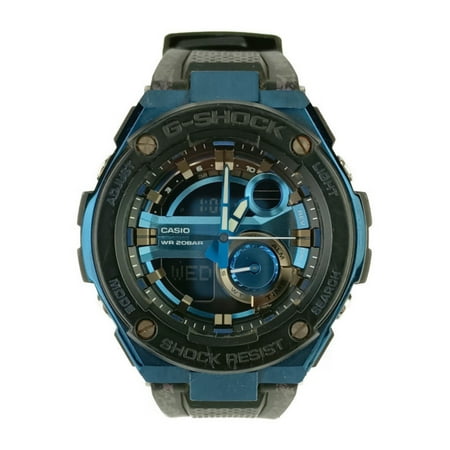
For casual buyers, the Casio Duro MDV106 is a sensible choice if the priority is a straightforward quartz watch with a documented 200 m water-resistance rating and conventional dive-watch styling. Its appeal is practical rather than luxurious: quartz operation keeps daily use simple, while published commentary has described it as a budget-friendly beater or gift. That combination makes it a reasonable starting point for a beginner, a low-risk gift for someone curious about watches, or a casual wearer who wants a watch for rougher everyday use.
The recommendation becomes more conditional when the requirements are demanding. Casio states that the watch does not have ISO certification, so buyers seeking a formally certified dive instrument should look elsewhere. Recurring criticism of the lume suggests that night legibility may not be consistently strong, and the published specification identifies mineral crystal. Its published dimensions—48.5 by 44.2 by 12.1 mm—may also rule it out for shoppers specifically seeking compact proportions. Finally, reported prices vary by region and retailer, so confirm a current, locally applicable price before buying.
This is an evidence-based overview, not a claim that Eva Watches handled, tested, or independently verified the Casio Duro MDV106.