

As an Amazon Associate, we earn from qualifying purchases. We may also earn a commission from other retailers linked on this page, at no extra cost to you.
Introduction: Why Cartier Tank Authentication Requires More Than a Quick Look
Knowing how to spot fake Cartier Tank watches begins with resisting the temptation to accept one convincing detail as proof. The Cartier Tank Louis Cartier has been described as the most imitated watch in the world, and Cartier once emphasized the scale of the problem by running approximately 5,000 fakes over with a bulldozer in 1985. Those facts do not make every pre-owned Tank suspect, but they do make a methodical inspection more sensible than relying on a single photograph, marking, or design cue.
This guide addresses Cartier Tank watches specifically. It does not cover Cartier jewelry, eyewear, or every other watch in the brand’s catalog. Extra caution is justified when assessing used or lower-priced examples, given the Tank’s documented history of imitation. The checks that follow are arranged as a practical sequence: first consider the watch’s overall form and finishing, then examine its markings and construction, compare the result with documentation and details appropriate to the claimed period, and seek professional assessment when the evidence conflicts.
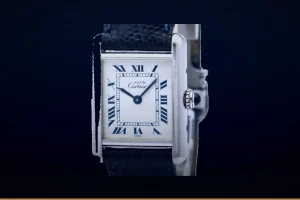
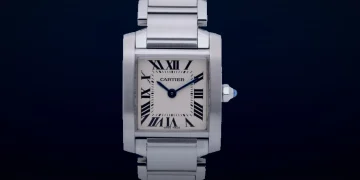
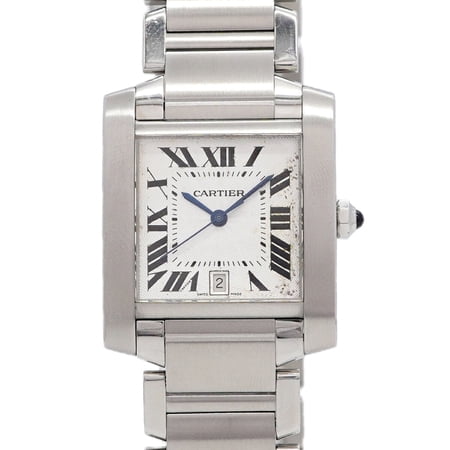
The Tank’s brancards, Roman numerals, railroad minute track, blued pomme hands, and cabochon crown provide useful points of reference when assessing a reproduction. They are not standalone authentication tests. The relevant question is whether the proportions, execution, paperwork, and period-specific details make sense together. That wider comparison matters because the Tank wristwatch has changed very little since its debut, so a familiar appearance alone cannot establish that a particular example is genuine.
Quick Answer: Start With the Design, Then Verify the Serial
Quick Answer: Start With the Design, Then Verify the Serial
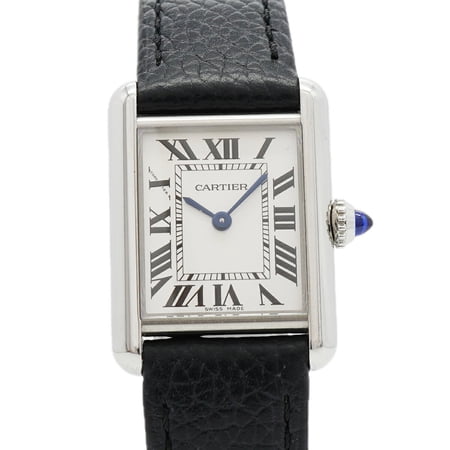
To learn how to spot a fake Cartier Tank, use the design as an initial screen, not as proof of authenticity. Check the brancards, Roman numerals, railroad minute track, blued pomme hands, and cabochon crown against the watch’s claimed model. These details are useful reference points for identifying a poor reproduction, while visible discrepancies should prompt closer examination.
- Inspect the case back. A Cartier Tank should have both a serial number and a reference number engraved on the case back. Compare those details with the claimed model and its expected production era, bearing in mind that Cartier has made many Tank variants and sizes over several decades. A mismatch between the case style, the numbers, and the supposed era requires further investigation.
- Match the paperwork. If papers accompany the watch, compare the serial printed on the documents with the serial engraved on the case. The two should match exactly.
- Use physical clues only as a first filter. Weight, visible finishing, and the quality of the crown cabochon can reveal obvious counterfeits. They may not, however, separate a well-made fake from a genuine Tank.
For a higher-value or precious-metal Tank, arrange an independent, hands-on professional inspection before committing to the purchase. Visual examination and an online serial query can be useful, but either check alone may be insufficient.
What Matters Most When Checking a Cartier Tank

What Matters Most When Checking a Cartier Tank
Authentication starts with the Tank’s design language, not with a single detail treated as a pass-or-fail test. The core references are the rectangular case, its broad extended sides or brancards, Roman-numeral dial, and railroad-style minute track. On the Tank Louis Cartier, blued pomme-style hands and a crown finished with a sapphire cabochon provide additional points of comparison. Taken together, these elements can expose a poor reproduction when its proportions, finishing, or relationship between components do not look coherent. They remain screening points, not proof of authenticity.
Compare the dial with the correct variant
Begin by checking the Roman numerals, railroad minute track, hand shape, and crown against clear images of the specific Tank variant. The blued pomme-style hands and sapphire cabochon are especially relevant when the watch is presented as a Tank Louis Cartier. A mismatch in one of these areas should prompt further questions, but it does not establish that the watch is counterfeit: genuine models and variations must be compared with the correct reference.
Many Cartier dials with Roman numerals are reported to include the word “Cartier” in very small script within one of the numerals, with the numeral used varying by model. If the model is expected to show this feature, its absence is a useful reason to investigate further. Its presence is not conclusive, however. A counterfeit can reproduce a small signature, while an authentic dial may position the detail differently from the example used for comparison.
Examine the case, bracelet, and crown
Next, inspect the case and bracelet closely, paying attention to edges and the transitions between finished surfaces. Cartier’s case and bracelet finishing is described as jewelry-grade, making soft edges, visible tool marks, and wear that reveals plating sensible reasons to pause. These observations are warning signs rather than definitive findings: the condition of an individual watch can change what is visible. They should therefore lower confidence in an unverified listing, not replace proper authentication.
The crown cabochon deserves the same careful treatment. Authentication guidance identifies sapphire or spinel as the expected materials and calls for a clean setting. Colored glass glued into a socket, visible adhesive, gaps, or a crude setting are practical concerns. Judge the stone and its setting together with the surrounding case work; color alone cannot establish authenticity.
Treat visual checks as a first filter
Finishing, the watch’s overall weight, and the quality of the crown cabochon are useful first-line checks when learning how to spot fake Cartier watches because they can reveal obvious reproductions. They cannot clear a well-made counterfeit. Visual inspection and online serial queries may also be insufficient, particularly with higher-value or precious-metal Tanks, so significant uncertainty calls for a professional inspection.
Buying Considerations: Model, Era, Material, and Documentation
Buying Considerations: Model, Era, Material, and Documentation
The first step in learning how to spot fake Cartier is to identify the Tank in front of you—not to compare it with a single, idealized version of the design. The Tank Normale was created in 1917 and released as a production watch in 1919, while the Tank Louis Cartier was first released in the early 1920s. Those distinctions establish different historical and technical reference points for the case, dial, crown, and movement.
Tank design changed significantly across the family. Cartier introduced the Tank Allongée in 1922 with an elongated case, narrower shape, and longer brancards. The Tank Cintrée curves around the wrist, while the Tank Américaine has its own case design; Cartier released the Tank Américaine in stainless steel for the first time in 2017. A feature that appears inconsistent with one Tank may be correct for another, so serial and reference checks are most useful when they are read alongside the claimed model and era.
Movement expectations also depend on the collection. The Tank MC introduced the first Tank models with 100% in-house automatic movements in 2013. The Tank SolarBeat, released in 2021, uses a quartz movement charged by sunlight. Many Tank Must de Cartier watches use quartz movements, while some have hand-wound movements. Quartz is therefore not, by itself, evidence that a Tank is counterfeit.
Period details require the same restraint. From 1967, dials were signed “Paris” below six o’clock. That can be a useful dating or contextual clue, but it should not be treated as a universal requirement for every Tank. The Must de Cartier Tank was introduced in 1977, and its gold-plated versions helped popularize the form. A gold-colored Tank Must is gold vermeil, while traditional gold Tanks are described as solid 14k or 18k gold. Check the claimed material against the model rather than relying on color in photographs.
Size is another source of false positives. Cartier has offered Tank variations and sizes across different periods, including twelve Tank L.C. options and modern Large and Small L.C. dimensions. Compare the watch with the seller’s stated model and its documented dimensions; a size that does not suit your preferred wrist presence does not establish that the watch is inauthentic.
Paperwork can strengthen the case file, but it remains supporting evidence. If papers accompany the watch, compare the serial shown on the documents with the serial on the case. Any discrepancy deserves an explanation, while matching paperwork should still be considered alongside the watch’s construction and its consistency with the claimed model, material, movement, and period.
Authentication Options Compared: At-Home Checks, Serial Research, and Professional Inspection

Authentication Options Compared: At-Home Checks, Serial Research, and Professional Inspection
No single check settles whether a Cartier Tank is genuine. A sensible process moves from visible details to case-back information and paperwork, then to an independent professional inspection when the watch’s value or construction warrants greater certainty. Each stage can reveal inconsistencies, but each also has clear limits.
| Approach | What it can establish | What it cannot establish |
|---|---|---|
| At-home visual inspection | Begin with details that can be assessed without opening the watch. Case and bracelet finishing, overall weight, and the quality of the winding crown’s cabochon are useful first-line checks. Soft edges, visible tool marks, plating wear, or a poorly set cabochon justify closer investigation. On many Cartier dials that use Roman numerals, the brand name is also concealed in very small lettering within a numeral; its position depends on the model. | These observations can expose obvious problems, but a convincing counterfeit may reproduce surface details well enough to pass a casual inspection. Visual evidence is therefore a screening tool, not a complete authentication. |
| Serial and reference research | Inspect the case back for both a serial number and a separate reference number. Those details can be compared with the Tank’s stated production era, case style, and other expected attributes; where appropriate, the serial can also be checked against stolen-watch records. Because Cartier has produced many Tank variants and sizes over several decades, this comparison is particularly useful for identifying a mismatch between the watch and the period it is claimed to represent. | A serial is one consistency check, not proof of authenticity by itself. Many Cartier serials from approximately 1970 through 2009 are described as having a two-digit year prefix, while serials introduced from 2010 onward are described as randomized alphanumeric sequences that do not encode a date. A modern sequence therefore cannot establish the watch’s age on its own. |
| Paperwork | When papers accompany the watch, compare the serial printed on the documents with the serial engraved on the case. An exact match adds useful corroboration to the other checks. | Matching paperwork does not conclusively authenticate the watch. Documents can become separated from the watch, so they should be treated as supporting evidence rather than a substitute for examining the watch itself. |
| Independent professional inspection | An independent professional examination is the appropriate next step when visual checks and online serial research leave uncertainty, particularly for a higher-value Tank or one made in precious metal. | This route involves more effort than inspecting photographs or searching a serial, but those preliminary methods may not be sufficient when the financial or material stakes are higher. |
How to move from one check to the next
For anyone learning how to spot fake Cartier, the sequence is practical: start with finishing, weight, the cabochon, and dial details; use the serial and reference numbers to test whether the case fits its claimed era; compare any paperwork exactly; and seek independent professional inspection when the watch’s value, precious-metal construction, or unresolved inconsistencies make a visual judgment inadequate.
Pros and Cons of Each Authentication Approach
Pros and Cons of Each Authentication Approach
The most useful way to think about how to spot fake Cartier watches is as a sequence of increasingly demanding checks. Begin with what can be inspected visually, then compare the watch with its paperwork and recorded identifiers. For a higher-value or precious-metal Tank, an independent professional assessment is the most appropriate final step because appearance and online serial checks can both leave questions unanswered.
1. Quick self-check: useful triage, not proof
Advantages: A first inspection can identify problems in the case, bracelet, and crown. Cartier’s finishing is described as jewelry-grade, so soft edges, visible tool marks, or plating wear should prompt caution. The winding crown’s cabochon should be sapphire or spinel and cleanly set rather than appearing to be colored glass glued into place.
Limitations: These checks are best at catching obvious reproductions. A counterfeit can still present a convincing appearance, and a watch that looks correct has not therefore been authenticated. Treat a clean visual result as permission to continue checking, not as a final decision.
2. Seller documents, serial, and reference review
Advantages: The case back should carry both a serial number and a reference number. When papers are supplied, compare the serial on the documents with the serial on the case; the two should match exactly. Where possible, run the serial through a stolen-watch check and decode it against the model’s production era. These steps can identify missing information or inconsistencies before a physical inspection.
Limitations: Matching paperwork does not settle the question by itself. Cartier has produced many Tank variants and sizes across decades, so the serial and reference should be considered alongside the case style and the attributes expected for that era. A serial check alone can be insufficient, particularly when it does not explain whether the watch’s physical details belong together.
3. Independent professional inspection
Advantages: An independent professional inspection provides the strongest option for a higher-value or precious-metal Tank. It adds a physical examination to the visual comparisons and online checks, which is important when those earlier steps do not resolve a discrepancy or when the consequences of a mistaken purchase are significant.
Limitations: This route depends on the watch being physically examined, so it may be less convenient before a transaction than an initial visual review or document check. If the serial appears stolen or otherwise suspect, pause the transaction, do not resell the watch, preserve the listing and documents, and seek guidance from the relevant authority or a qualified professional.
Practical order: Use the self-check to screen for visible concerns, the documents and identifiers to look for inconsistencies, and independent inspection when the watch is valuable or the evidence remains unclear. No single check should outweigh a contradiction elsewhere in the case, paperwork, or production-era details.
Recommended Watches
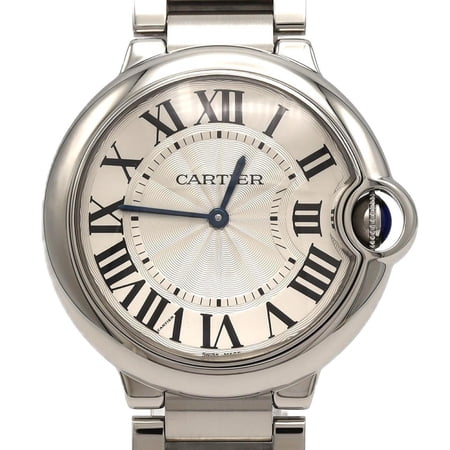
There are no eligible affiliate recommendations for this section because the affiliate database contains no matched products. We therefore have not added unrelated Cartier models or lookalike watches in their place. The useful buying guidance here remains authentication: knowing how to spot fake Cartier requires more than recognizing a familiar rectangular case.
The Tank’s visual continuity makes that distinction especially important. The Tank Normale, introduced in 1919, is identified as the first Tank watch, while the Tank Louis Cartier has been described as the most imitated watch in the world. A persuasive silhouette can establish that a listing resembles a Tank, but it cannot by itself establish that the individual watch is genuine.
Cartier’s stated design history adds context without providing a shortcut to authentication. The brand has consistently identified the Renault FT as the Tank’s inspiration. Its two wide treads are said to have informed the watch’s elongated case sides, known as the brancards. That connection explains the enduring importance of the Tank’s proportions and architecture; it does not verify a dial, case, serial number, movement, or accompanying documents.
For a vintage or pre-owned example, keep the process focused on the specific watch rather than moving to a substitute recommendation. Establish which Tank family and period the seller is claiming, then compare the visible construction and dial arrangement with reliable references for that version. Request clear evidence for the watch’s identity and provenance, and treat inconsistencies or incomplete information as reasons to pause. When the seller’s evidence cannot be independently checked, a qualified inspection is the prudent next step before purchase.
Frequently Asked Questions About Fake Cartier Tanks
What visual details on the dial and case indicate an authentic Cartier Tank?
Start with the Tank’s architecture: a rectangular dial, broad brancards, Cartier Roman numerals, a railroad minute track, and blued pomme-style hands should appear coherent for the claimed model. Many Cartier dials also hide a small “Cartier” signature within a Roman numeral, although its position varies. Soft case edges, visible tool marks, or worn plating are warning signs rather than proof of authenticity.
How should the winding crown and cabochon look and feel on a genuine Tank?
The crown should be finished with a neatly set sapphire or spinel cabochon, not a piece of colored glass glued into place. Its setting and the surrounding case finishing should look precise and consistent with a jewelry-grade watch. A poor cabochon can expose an obvious counterfeit, but a convincing crown alone cannot authenticate the entire watch; compare it with the claimed Tank model and have the watch inspected when necessary.
Can weight and finishing reliably distinguish a real Tank from a fake?
Weight and visible finishing are useful first-line checks, particularly for catching crude reproductions. Cartier’s case and bracelet finishing is described as jewelry-grade, so soft edges, tool marks, or plating wear deserve scrutiny. These checks are not conclusive: weight varies with the model, case material, movement, and construction, while a well-made counterfeit may imitate finishing convincingly. Use them as evidence, not as a verdict.
Where is the serial number located, and how should it match the paperwork?
The serial number is engraved on the case back and is separate from the reference number. If paperwork is supplied, its serial should match the case exactly; even a small discrepancy needs an explanation before purchase. You can also run the serial through a stolen-watch check, but a clean result does not establish that the case, dial, movement, and documents belong together.
How have Cartier serial formats changed over time, and how does that affect authentication?
Many Cartier serials from roughly 1970 through 2009 carry a two-digit year prefix. From 2010 onward, Cartier reportedly used randomized alphanumeric serials that do not encode a production year. That means a modern serial cannot reliably date the watch. Instead, compare the serial and reference with the claimed model and era, then verify the physical watch independently.
When is a professional, hands-on authentication necessary, and what does it include?
A professional inspection is especially sensible for a higher-value or precious-metal Tank, or whenever the serial, paperwork, model, or visible details conflict. A qualified independent specialist should examine the watch hands-on rather than relying only on photographs or an online serial query. The process should compare the model and era with the case, dial, hands, crown, finishing, serial, reference, and—where appropriate—the movement.
Final Advice: Build Confidence Before You Buy

Build confidence in stages. First match the claimed Tank model and era, then inspect the dial, hands, crown, case, and visible finishing for consistency with that identification. Next, verify the case-back serial and reference independently rather than treating either as conclusive, and compare the serial with any supplied paperwork exactly. Do not attempt to date a post-2010 randomized alphanumeric serial from its characters; it deliberately encodes no production information. If the evidence remains coherent, proceed only when the seller’s documentation and terms are satisfactory. For a valuable or precious-metal Tank, make the purchase conditional on an independent professional inspection: visual checks and online serial searches may not identify a well-made counterfeit.