

As an Amazon Associate, we earn from qualifying purchases. We may also earn a commission from other retailers linked on this page, at no extra cost to you.
Introduction: Tank Must or Tank Louis Cartier?
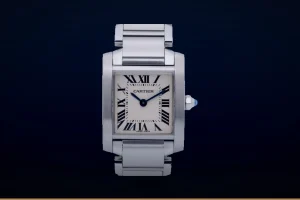
The Cartier Tank Must vs Louis decision is less about choosing between two identical watches than deciding what matters most in ownership. The Tank Must is generally the practical, more accessible option: it is positioned as the entry-level Tank, and it is the only version available with Cartier’s light-powered Solarbeat quartz movement. That combination makes it the clearer choice for buyers who prioritize straightforward daily use, a lower position within the collection, and a quartz movement.
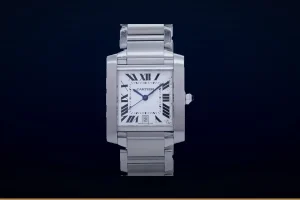
The Tank Louis Cartier takes the more traditional and mechanically focused path. Its watches use Cartier’s hand-wound caliber 1917 MC, and the collection is often presented in 18k gold, with generally higher positioning than Tank Must models. Winding the watch, choosing a precious-metal interpretation, and accepting the associated budget difference may matter as much as the case design itself. The right answer therefore depends on material preference, interest in mechanical movements, daily-wear expectations, and budget.
This comparison addresses the modern Tank Must and Tank Louis Cartier families. Vintage Must de Cartier watches should be assessed separately: the Must de Cartier Tank was introduced in 1977, is gold-plated, and is not an L.C., despite its similar shape.
The short answer: which Tank should you buy?
The short answer: which Tank should you buy?
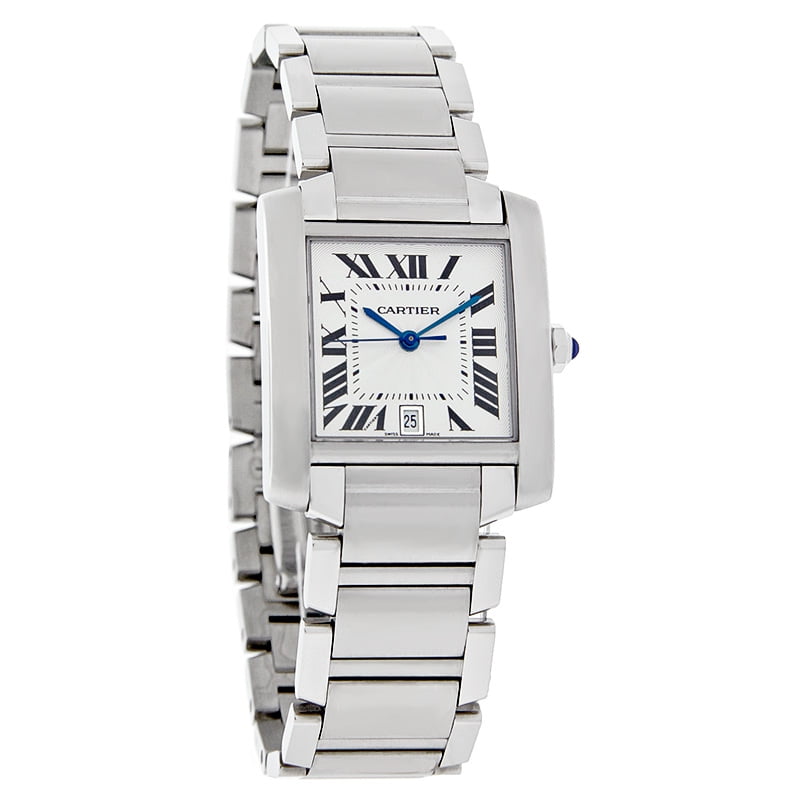
Buy the Tank Must if you want the most accessible route into Cartier’s Tank collection and prefer quartz convenience for everyday use. Tank Must models are quartz-powered, and the line is the only Tank collection available with Cartier’s light-powered Solarbeat quartz movement. That makes the Must the practical choice if you do not specifically want a hand-wound movement.
Buy the Tank Louis Cartier if the movement and materials are central to the appeal. All three Louis Cartier watches use the hand-wound caliber 1917 MC, so the watch offers more direct interaction than a quartz model. The collection is a more luxurious interpretation of the original Tank, with rounded brancards, a beaded crown, and an 18k gold case. It also reaches back to the Tank’s early history: the Tank Louis Cartier dates to the 1920s.
The clearest division is practical versus traditional. Choose the Must for accessible entry into the collection and quartz or Solarbeat power; choose the Louis Cartier for hand-wound mechanics, 18k gold construction, and a closer link to the Tank’s historic design language.
Specifications compared: Tank Must vs Tank Louis Cartier
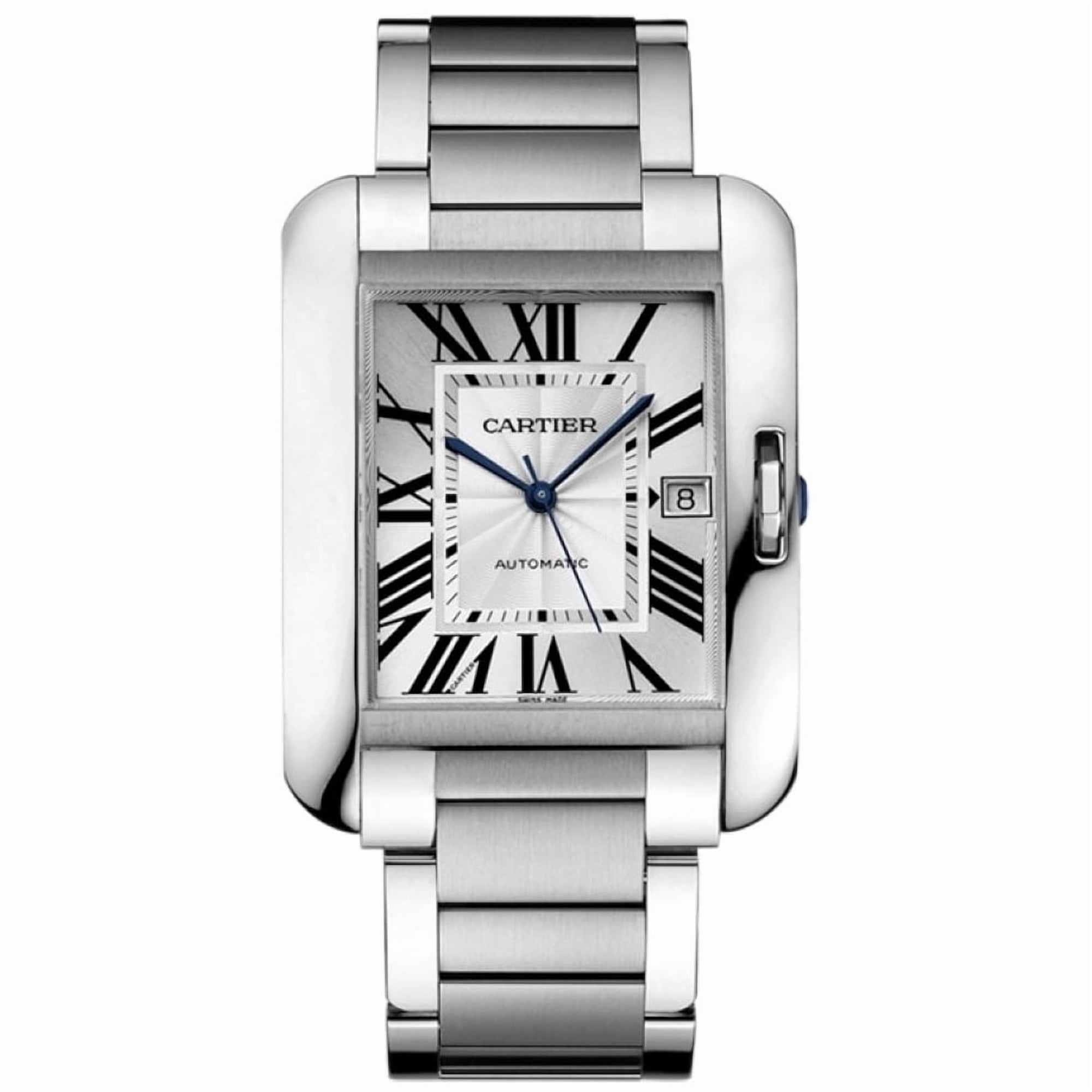
The practical difference in the cartier tank must vs louis comparison is not only price. It is also the choice between quartz convenience and a more traditional hand-wound movement, alongside a marked difference in case-material positioning.
| Category | Tank Must | Tank Louis Cartier |
|---|---|---|
| Movement | The cited Tank Must lineup is quartz-powered, including Cartier’s light-powered Solarbeat quartz option. | The cited 2022 examples use Cartier’s hand-wound caliber 1917 MC. It offers a 38-hour power reserve and runs at 21,600 vph. |
| Winding method | Battery-powered quartz, or light-powered quartz for Solarbeat; the exact system depends on the reference. | Manual winding, requiring regular winding rather than automatic winding. |
| Case and material positioning | The original Must de Cartier is described as gold-plated, rather than an L.C. model. That description should not be extended to every current Tank Must reference without checking its specification. | The cited Louis Cartier examples use 18k gold cases and the collection’s characteristic rounded brancards. |
| Historical role | Introduced in 1977, the Must de Cartier offered a similar Tank shape without being an L.C.; the modern Must is positioned as the most accessible Tank. | The Tank Louis Cartier dates to the 1920s and has remained more faithful to the original Tank form. |
| Price positioning | Generally the more accessible collection, but the cited listings are conflicting and stale: historical figures include $3,090 and $4,555 for a large steel example. | Historically listed above the Must in the cited examples, with conflicting figures of $7,070 for small and $9,985 for large. These are not current prices. |
Dimensions should be checked reference by reference. The available source material gives measurements for particular Tank Louis Cartier models, not one universal Louis or Must size, so this comparison intentionally does not assign a single case dimension to either collection.
For collectors, the Louis makes the stronger case when precious-metal construction, rounded brancards, and a hand-wound movement are central to the appeal. The Must is the clearer choice when quartz convenience and lower positioning matter more. Current prices, case materials, and dimensions still require verification against the exact Cartier reference.
Design and wearability: case shape, dials, and straps
Design and wearability: case shape, dials, and straps
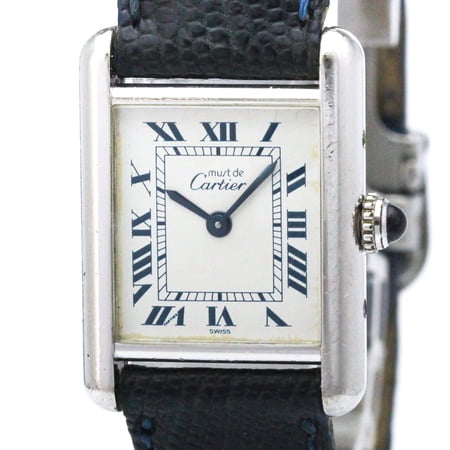
The useful distinction in the Cartier Tank Must vs Louis comparison is not the rectangular outline alone, but how closely each line follows the original design. Louis Cartier created the Tank in 1917, and its signature profile has remained an icon for more than a century. The Tank Louis Cartier has stayed more faithful to that original form, while the Tank Must represents a broader reinterpretation of it. That makes the Louis Cartier the more historically direct choice; the Must preserves the recognizable silhouette without presenting itself as an L.C..
The case details reinforce that distinction. The Tank Louis Cartier is described as a luxurious interpretation of the original, with rounded brancards, a beaded crown, and an 18k gold case. The Must de Cartier Tank introduced in 1977 was gold-plated and used a similar shape, but was not an L.C.. In practical terms, those differences give the Louis Cartier a more formal visual language, while the Must’s less historically specific positioning leaves more room for a casual or everyday interpretation. The precise wrist presence still depends on the individual reference: Cartier currently offers twelve Tank L.C. options, and published measurements for the modern Large and Small L.C. should not be treated as universal dimensions for every Tank or Must.
Dial selection can shift the balance between restraint and statement. Documented Tank Must versions include blue, green, maroon, and black dials. Cartier has also used a high-precision electrochemical engraving technique for dial markings; their changing orientations recreate the pattern found on Must watches from the 1980s. Other documented treatments include red and green lacquer-effect dials, a gray dial with a galvanized finish, gray and Bordeaux mosaic dials, and all-black dials. These options make the Must the more visibly varied line, whereas the traditional Louis Cartier case and gold construction establish a dressier baseline. Strap and bracelet configurations vary by specific reference, and the published information here does not establish a universal pairing; match that choice to the case dimensions and the formality of the dial rather than relying only on the Small, Medium, or Large name.
Movement and performance: quartz convenience or hand-wound character?
Movement and performance: quartz convenience or hand-wound character?
In the cartier tank must vs louis decision, the movement sets the tone for ownership. Tank Must models are quartz-powered, and the collection is also the only Tank line available with Cartier’s light-powered Solarbeat quartz movement. That gives buyers two quartz approaches within the Must family: a conventional option and a Solarbeat alternative. The appropriate care requirements depend on the specific reference, so Cartier’s guidance remains the useful point of reference for battery and Solarbeat questions.
The Tank Louis Cartier makes a more traditional mechanical choice. All three Louis Cartier watches covered by the cited specification use Cartier’s hand-wound caliber 1917 MC. The caliber has a 38-hour power reserve and runs at 21,600 vibrations per hour. In practical terms, that gives the owner a direct winding ritual and makes the watch’s running time part of the ownership experience: if it has stopped, it must be wound and the time set before it is worn again. That arrangement will appeal to collectors who value mechanical interaction; buyers who prefer the least involvement between wears may find the quartz-powered Tank Must proposition more suitable. The distinction is not a claim about one movement being more reliable than the other. Service intervals and failure rates are not established by the information available here.
There is also a difference in positioning. The Tank Must is described as the more accessible, entry-level Tank and combines quartz with the option of Cartier’s light-powered Solarbeat system. The Tank Louis Cartier is presented as the more traditional, luxury interpretation of the design, with hand-wound mechanics and frequent use of 18k gold in the broader description of the model. For a buyer, the choice is therefore less about a universal performance verdict than about the kind of interaction the watch should provide: straightforward quartz ownership in the Must, or a more involved mechanical relationship in the Louis. Cartier Care includes an extended eight-year warranty among its services, which is relevant to either choice, although it does not establish comparative long-term reliability.
Value, ownership, and servicing
Value, ownership, and servicing
Published prices do not provide a reliable answer to the Cartier Tank Must vs Louis question unless the watches are current, comparable examples. The listings cited here show a Tank Must Large Steel at $3,090 in one instance and $4,555, or $4,305 after the stated discount, in another. The Tank Louis listings range from $7,070 to $9,985, with discounted figures also shown. Because these are dated and conflicting listings rather than current Cartier retail prices, they should be treated as historical reference points—not as a dependable guide to what either watch should cost today.
Vintage examples require a separate assessment. The original Must de Cartier, also called the Tank Vermeil, is gold-plated and is not a Tank Louis Cartier; the Louis Cartier Collection was introduced in 1973. The distinction matters because the condition of a vintage Must can have a greater effect on its value than its low entry price suggests. Sources describe 1970s examples as having inconsistent quality and aging poorly, while 1980s vintage Must de Cartier watches have been offered for under $1,000. Inspect the case edges, corners, and clasp for plating loss, and check the dial, movement, and service records before treating any inexpensive example as a sound purchase. Originality and condition are more useful measures than the headline price alone.
Provenance also deserves attention when comparing older Tank Louis watches. The Tank L.C. is described as the most imitated watch in the world, and Cartier reportedly highlighted about 5,000 fake watches in 1985. That history makes authentication particularly important for a vintage purchase. For a newer watch, Cartier Care offers an extended eight-year warranty, subject to the program’s terms, and Cartier presents an option to extend a watch warranty. Those benefits may improve ownership confidence, but they do not make the purchase price a complete measure of long-term cost; the watch’s condition, authenticity, and documented service history still need to be assessed individually.
Pros and cons of the Tank Must and Tank Louis
There is no single answer to the Cartier Tank Must vs Louis question. The better choice depends on whether you prioritize quartz convenience, a broader range of contemporary dial treatments, and access to Solarbeat—or a more traditional gold-case design with a hand-wound movement.
Choose the Tank Must if convenience comes first
- Quartz operation: Tank Must models are quartz powered, which suits an owner who wants less regular interaction with the watch.
- Solarbeat availability: The Must is the only Tank version available with Cartier’s light-powered Solarbeat quartz movement.
- More accessible entry point: Cartier positions the Must as the most accessible Tank in its lineup.
- Contemporary dial variety: Recent offerings include Tri-gold, Three Gold, green lacquer-effect, and red lacquer-effect dials.
Accept the Tank Must’s compromises if you prefer modern practicality
- Less mechanical involvement: Quartz gives priority to convenience rather than the winding ritual and mechanical character of the hand-wound caliber used in the cited Louis Cartier models.
- Inspect vintage examples carefully: The original Must de Cartier, also called the Tank Vermeil, is gold-plated rather than an L.C.; 1970s examples in particular can show inconsistent aging and quality concerns.
Choose the Tank Louis Cartier if traditional construction matters most
- More historically rooted design: The Tank Louis Cartier is a luxurious interpretation of the original Tank, with rounded brancards, a beaded crown, and an 18k gold case.
- Hand-wound movement: The cited Louis Cartier watches use Cartier’s hand-wound caliber 1917 MC, adding a deliberate winding ritual to ownership.
- A clearer fit for traditionalists: Its gold-case construction and hand-wound movement favor buyers seeking the more formal, mechanically engaged side of the Tank family.
Accept the Tank Louis Cartier’s compromises if you want mechanical engagement
- Regular winding is part of the experience: The hand-wound caliber requires more involvement than the quartz-powered Tank Must, so it is less suited to buyers who want minimal interaction.
- Price comparison is not fixed here: Pricing varies by model and is not established by the cited specifications. Compare the exact references, case materials, and current Cartier pricing before deciding.
In practical terms, the Must favors low-interaction ownership and contemporary choice, while the Louis Cartier favors traditional materials and hand-wound mechanics. Vintage Must de Cartier watches require a separate condition assessment because age and plating wear can materially affect the buying decision.
Where to buy
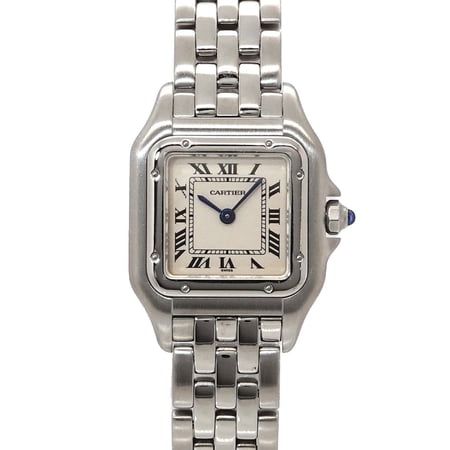
No specific products or retailers are listed for this Cartier Tank Must vs Louis comparison. If you are buying through another channel, verify the exact model, the seller’s warranty terms, and which documents accompany the watch before completing the purchase.
Cartier Care may be relevant after purchase: Cartier says that registration provides exclusive services, including an extended eight-year warranty. Cartier’s website also presents a prompt or option to extend a watch warranty. Check the coverage available for the watch you are considering, along with any registration requirements, rather than assuming that the same terms apply to every sale.
Frequently asked questions
What is the main difference between the Cartier Tank Must and Tank Louis Cartier?
The Tank Must is the more accessible interpretation of the Tank, while the Tank Louis Cartier is the more traditional luxury version. The Louis stays closer to the original form, with rounded brancards, a beaded crown, and, in the cited examples, an 18k gold case. The Must de Cartier introduced in 1977 was gold-plated and shared the general shape without being a Tank L.C.
Should I buy a quartz or Solarbeat Tank Must for daily wear, or choose the mechanical Tank Louis Cartier?
Choose the Tank Must if you want the simplest daily routine: current Must models are quartz-powered, and the collection includes Cartier’s light-powered Solarbeat quartz option. Choose the Tank Louis Cartier if regular interaction with a hand-wound movement is part of the appeal. The cited Louis references use the hand-wound caliber 1917 MC, with 38 hours of power reserve and a frequency of 21,600 vibrations per hour.
How do Tank Must and Tank Louis Cartier prices compare?
The Tank Must generally occupies the more accessible tier, while the Tank Louis Cartier is positioned higher as a more traditional luxury watch, often using 18k gold. Historical price listings cited for comparison show a steel Tank Must at $4,555 and a Tank Louis Small at $7,070, but those figures are dated and conflicting. Check Cartier’s current pricing and the exact reference before buying.
Are vintage Must de Cartier watches a good value, and what are the quality trade-offs?
Vintage Must de Cartier watches can offer an inexpensive route into the Tank design: cited market coverage says 1980s examples can be found for under $1,000. The trade-off is condition and construction. GQ notes that many 1970s models lacked Cartier’s typical attention to quality and have not aged well. Verify the case, plating, dial, movement, service history, and originality before purchase.
What sizes are available for the Tank Must and Tank Louis Cartier, and how do they wear on the wrist?
The current Tank Louis Cartier range includes Small and Large options, and Cartier’s current lineup is reported to include twelve Tank L.C. options. The Tank families are rectangular, so case dimensions and lug-to-lug length matter more than diameter alone when judging fit. A smaller case will read discreetly; a larger one will have more presence. Check the exact reference’s measurements before ordering, since sizes vary across releases.
Verdict: choose the Tank that matches your priorities
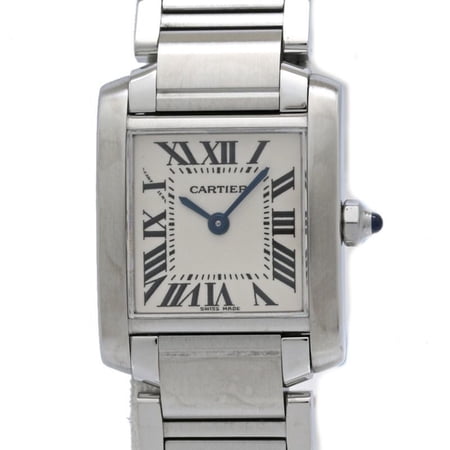
Verdict: choose the Tank that matches your priorities
The better choice depends on what you want the watch to represent in daily use. Choose the Tank Must if accessibility and convenience matter most: it is positioned as the entry-level Tank, and selected versions use Cartier’s light-powered Solarbeat quartz movement. That makes it the practical direction for a buyer who prefers minimal interaction with the watch rather than the ritual of winding.
The Tank Louis Cartier is the stronger fit for a collector drawn to continuity with the original Tank design. It has remained more faithful to that form than the Tank Must, while its more traditional interpretation commonly combines hand-winding with 18k gold construction and a higher price position. The reason to choose it is therefore not simply mechanical complexity, but a preference for the historical and material character of this version.
For a vintage purchase, the name on the dial is only the beginning of the assessment. The original Must de Cartier, also known as the Tank Vermeil, is the most affordable vintage Tank variant, while 1970s examples in particular may show inconsistent quality and age-related problems. Must de Cartier pieces from the 1970s and 1980s can still be inexpensive, but buyers should approach them with particular care and examine the plating, originality, movement and service history.
Cartier Care may also influence the decision between a quartz and mechanical Tank: registration provides services including an extended eight-year warranty. Before committing to either model, verify the exact reference and configuration, then assess the individual watch’s condition and service history. Those details can matter more than choosing Must or Louis in the abstract.