


As an Amazon Associate, we earn from qualifying purchases. We may also earn a commission from other retailers linked on this page, at no extra cost to you.
Choosing Cartier as a first luxury watch is less about winning a specification contest than deciding whether the brand’s design language belongs in your collection. Its strength lies in iconic, design-led collections with recognizable shapes, although buyers who prioritize technical specifications may find better value elsewhere.
This guide compares the Tank Must, Santos, and more distinctive Cartier collections against the criteria that matter after the initial appeal: case and dial design, movement technology, finishing, daily practicality, durability, budget, and the realities of long-term ownership. The Tank Must offers an accessible starting point, including the SolarBeat photovoltaic movement, with an estimated autonomy of 16 years. The Santos combines substantial historical significance with practical features suited to regular wear. We will also consider heritage and collecting interest without treating either as a substitute for sound ownership economics. Current prices, service costs, and availability should be verified before purchase, since the supplied research does not provide complete, up-to-date figures.
Quick Answer: Cartier Can Be an Excellent First Luxury Watch for the Right Buyer

Cartier makes an excellent first luxury watch for buyers who value recognizable design, heritage, and versatile collections more than maximum technical specification per dollar. Its strength is a group of iconic, design-led collections built around emblematic shapes. The Santos is the pragmatic daily-wear starting point: its historical importance is matched by practical modern features, including an automatic movement and quick-change strap system. The Tank Must offers the clearest entry into Cartier’s rectangular design language, with the relaunched line’s SolarBeat photovoltaic movement providing an estimated 16 years of autonomy. Cartier is less suitable if you require a 40mm-plus case, meaningful water resistance, or a highly technical mechanical movement at an accessible price.
What Matters Most in a First Cartier Watch
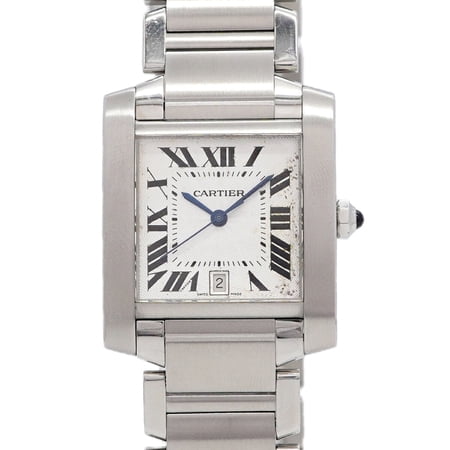
Design and identity come first. Cartier’s emblematic shapes are not incidental styling; they are the reason many buyers choose the brand over a technically denser alternative. The Tank, Baignoire, and Panthère de Cartier each establish a distinct visual language, making the collection choice more consequential than a specification comparison alone. For a first luxury watch, ask which shape you would still want after the novelty of the purchase has faded. Buyers who prioritize technical specifications over design may find stronger value elsewhere, while Cartier’s appeal is closely tied to heritage and recognizable form.
Heritage matters most when it clarifies the design. The Santos has an unusually direct origin story: Louis Cartier made a special wristwatch for aviator Alberto Santos-Dumont in 1904 so he could read the time without removing his hands from the controls. Cartier later put the Santos into production around 1911, selling it through its Paris flagship; early examples used small hand-wound movements made in partnership with Le Coultre. The collection’s later history includes a distinctive bracelet introduced in 1978 and the Santos 100 launch in 2004, marking the centennial of the original watch. This gives the Santos particular significance for a buyer who wants a first Cartier with a clear place in wristwatch history.
Choose the movement for the ownership experience. A quartz Cartier is the straightforward choice for someone who values simple, low-intervention timekeeping. The Tank Must adds a different proposition: Cartier relaunched it in 2021 with the photovoltaic SolarBeat movement, whose system channels light through perforations in the Roman numerals to cells beneath the dial. Cartier gives the technology an estimated 16-year autonomy. Mechanical ownership, by contrast, brings the ritual of an automatic movement and the interest of traditional horology, but it should be selected for that experience—not because “mechanical” automatically means better.
On the Santos, caliber 1847 MC runs at 4 Hz and provides a 42-hour power reserve. Its nickel-phosphorous components and paramagnetic-alloy protection address magnetic resistance, but these specifications should remain part of a broader comparison rather than a substitute for considering proportions, service expectations, and daily habits. Practicality also deserves attention: the Santos offers bracelet sizing and quick-change strap functionality, with SmartLink and QuickSwitch features available where supported by the selected configuration. That flexibility can make one Cartier more useful as a daily watch than another with a similar visual appeal.
Budget, Size, Movement, and Style
Budget, Size, Movement, and Style
Budget should determine which Cartier proposition you investigate, not whether the brand is viable. The supplied research confirms a broad range, from entry-level quartz or photovoltaic watches to gold and gem-set examples. A 2018 review listed a medium stainless-steel Santos with bracelet and strap at $6,250; treat that figure as historical context, not a current quotation. Current pricing, availability, and service terms should be confirmed with Cartier or an authorized retailer.
Proportion matters more than a specification sheet suggests. The cited Santos review distinguishes a medium case from a larger model, with the medium offering a time-only display and the large adding a small date window at six o’clock. That makes the choice partly practical: the medium is the cleaner expression, while the large offers more information and a stronger wrist presence. The review also gives the case thickness as 8.83mm. Compare the case dimensions with your wrist and cuffs rather than choosing by diameter alone.
For buyers who want low-intervention ownership, the Tank Must’s SolarBeat movement deserves attention. Cartier’s photovoltaic principle perforates the applied Roman numerals so light can reach photovoltaic cells hidden beneath the dial. Cartier states an estimated autonomy of 16 years, and introduced the technology with the Tank Must relaunch in 2021. This is a meaningful alternative to a conventional battery-powered quartz watch, though the long-term maintenance requirements should still be confirmed before purchase.
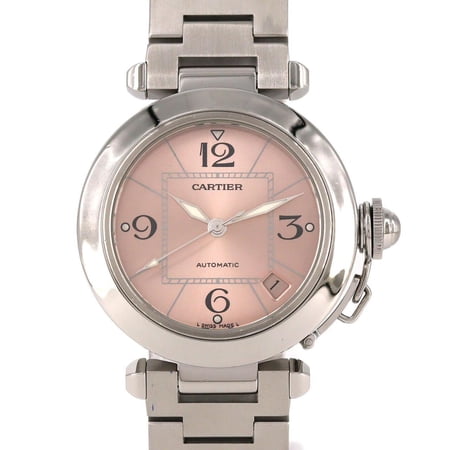
Style is the more decisive filter. The Tank’s rectangular case, the Santos’s square case with exposed steel screws, and the Baignoire’s oval profile represent distinct commitments rather than minor variations on one design. The Baignoire’s official release dates to 1957, with an earlier creation attributed to Louis Cartier in 1912. Buyers concerned about visible wear should examine material and finish carefully: polished Santos bezel surfaces can show scratches readily, making titanium or a willingness to accept surface maintenance worth considering. Ask Cartier or an authorized service provider about servicing and maintenance before committing.
Tank Must, Santos, and More Distinctive Cartier Options Compared
For a cartier first luxury watch, the strongest choice depends on whether you want Cartier’s most accessible technical experiment, its historically important sports-watch design, or a more distinctive dress-watch shape. The comparison below separates documented movement facts from areas that require confirmation at the point of purchase.
| Path | Design language | Movement evidence | Daily-wear practicality | Best-fit buyer |
|---|---|---|---|---|
| Tank Must photovoltaic | Tank codes with Roman numerals that are perforated to let light reach photovoltaic cells beneath the dial. | SolarBeat photovoltaic movement; estimated autonomy of 16 years. | Long autonomy avoids traditional battery changes, though other durability specifications are not confirmed here. | Someone who wants classic Cartier design with an unusual, low-maintenance movement. |
| Tank Must quartz or mechanical | Tank design remains the defining proposition; Cartier’s watches are distinguished by emblematic shapes. | Quartz and mechanical details are not confirmed in the supplied fact bank. | Battery, servicing, power reserve, and water-resistance considerations require reference-specific confirmation. | A buyer prioritizing a particular price, thickness, or winding experience—but willing to verify the exact reference. |
| Santos | A historically significant wristwatch associated with Alberto Santos-Dumont; Cartier put it into production around 1911. | Medium and large models use caliber 1847 MC; the documented movement runs at 4 Hz and has a 42-hour power reserve. | Medium and large sizes, bracelet-and-strap flexibility through QuickSwitch, and self-sizing SmartLink support everyday use. | A buyer seeking an automatic Cartier with stronger daily-wear practicality and clear historical importance. |
| Baignoire | A more design-forward, bathtub-derived identity, with an official release in 1957 and an earlier Louis Cartier creation in 1912. | Not confirmed. | Its distinctive shape is less universally practical; durability specifications are not confirmed. | A collector who values design individuality and Cartier’s auction history more than all-purpose versatility. |
Tank Louis Cartier and Ballon Bleu are broader collection directions to investigate when the Tank Must or Santos does not fit your taste. Confirm the specific movement, dimensions, and durability specifications before deciding; those details are reference-dependent and not documented here.
The Advantages and Trade-Offs of Choosing Cartier First
Choosing Cartier as a first luxury watch makes the most sense when design and identity matter as much as specifications. The advantages are substantial, but they are not universal.
Strengths
- Recognizable design: Cartier’s emblematic shapes and strong historical identity extend across collections including Tank, Santos, Baignoire, and Panthère.
- Useful daily-wear details: The Santos combines historical significance with an automatic movement, quick-change strap functionality, and bracelet-sizing features associated with systems such as QuickSwitch and SmartLink.
- A distinctive quartz alternative: The Tank Must SolarBeat uses photovoltaic technology, with Cartier reporting an estimated autonomy of 16 years.
Trade-offs
- Collectors who prioritize movement architecture, meaningful water resistance, larger cases, or technical value may find stronger alternatives elsewhere.
- Polished Santos surfaces can make scratches conspicuous, while resale varies substantially by model, material, condition, provenance, and market timing.
Strong auction results for rare or precious-metal Cartier watches should therefore be read as specific outcomes—not a guarantee of strong resale for every model.
Recommended Cartier Watches
No affiliate product placements are available in the supplied context, so there are no specific watches to recommend here or product boxes to insert. That is preferable to filling the section with unverified prices, references, or availability.
For a prospective Cartier first luxury watch, the most useful shortlist should begin with the collection rather than a specification sheet. Cartier’s identity is especially clear in collections such as the Tank, Santos, Baignoire, and Panthère de Cartier, all of which are associated with the brand’s emblematic shapes. The right editorial placement should therefore explain why its case design, dial treatment, and proportions suit the intended wearer, while making clear whether the watch is new or pre-owned.
The Tank Must deserves particular attention when movement technology is part of the appeal. Cartier relaunched the collection in 2021 with a photovoltaic movement, later identified as SolarBeatTM. Its Roman numerals are perforated so light can reach photovoltaic cells beneath the dial, and Cartier states an estimated autonomy of 16 years. That makes it a useful recommendation for a buyer who wants recognizable Cartier design with an unusual technical story, rather than conventional mechanical finishing.
The Santos suits a different buyer: someone drawn to Cartier’s early wristwatch heritage. Louis Cartier made a watch for aviator Alberto Santos-Dumont in 1904, and Cartier reportedly placed the Santos into production around 1911. Early examples used small hand-wound movements made by Le Coultre in partnership with Cartier. Any future product placement should preserve that distinction between heritage, movement type, condition, and value instead of treating every Cartier as interchangeable.


Prices and availability are accurate as of the date/time indicated and are subject to change.
Frequently Asked Questions
Is Cartier a good brand for a first luxury watch?
Yes, if design identity matters as much to you as movement specifications. Cartier’s strength is its recognizable, emblematic collections, including the Tank, Santos, Baignoire, and Panthère. Buyers focused primarily on maximum technical performance or specification per dollar may find stronger alternatives elsewhere. A first Cartier makes the most sense when you genuinely want Cartier’s shapes and heritage rather than simply its name.
Which Cartier model is best for daily wear: the Santos or Tank Must?
The Santos is the more pragmatic daily-wear choice when you want an automatic movement, a bracelet, and practical strap and sizing systems. The Tank Must is compelling when its rectangular design is the priority, especially in a photovoltaic SolarBeat version. Cartier relaunched the Tank Must with that technology in 2021; light reaches hidden photovoltaic cells through perforations in the Roman numerals, with estimated autonomy of 16 years.
Should a first Cartier be a Santos or Tank Must?
Choose the Santos if you want Cartier’s historically significant sports-watch design and a more mechanically oriented everyday proposition. Cartier’s Santos is generally accepted as the first watch designed for the wrist, and current versions use the automatic caliber 1847 MC; the collection also offers Cartier’s SmartLink bracelet sizing and QuickSwitch strap system. Choose the Tank Must if the classic rectangular profile and SolarBeat concept matter more than mechanical specification.
How much does an entry-level Cartier watch cost?
The supplied evidence does not establish a current entry-level Cartier price. A 2018 report listed a medium stainless-steel Santos with bracelet and strap at $6,250, but that is a historical figure and should not be treated as today’s price. Cartier spans accessible quartz or photovoltaic propositions through gold and gem-set watches, so check the current official price for the exact model, size, material, and movement before budgeting.
What is the difference between Cartier Tank Must quartz, photovoltaic, and mechanical watches?
The supplied facts specifically document the Tank Must’s photovoltaic SolarBeat movement: perforated Roman numerals let light reach photovoltaic cells beneath the dial, and Cartier estimates 16 years of autonomy. They do not provide enough detail to compare current Tank Must quartz and mechanical versions accurately, including their calibers, battery intervals, or prices. Check the exact reference, since movement choice affects maintenance, daily interaction, and the reason to buy that version.
Are Cartier watches mechanically respectable compared with competitors?
Cartier’s mechanical watches are respectable, but the supplied evidence does not support a complete competitor-by-competitor ranking. The Santos uses caliber 1847 MC, described as an in-house movement with a 4 Hz frequency and 42-hour power reserve; its construction includes features intended to improve resistance to magnetism. Cartier does not provide a gauss measurement, however, so specification-led buyers should compare the exact movement and competing models directly.
Final Advice: Buy the Cartier That Fits Your Priorities
Choose the Tank Must if Cartier’s rectangular design and the low-intervention SolarBeat concept are the main attractions: its photovoltaic movement uses light through perforated Roman numerals and has an estimated 16-year autonomy. Choose the Santos if daily versatility matters more. Its historical significance, automatic movement, and strap-and-bracelet flexibility make it the more pragmatic everyday choice.
Consider the Baignoire, Tank Louis Cartier, or Ballon Bleu only when that distinctive design is the reason for buying, rather than as interchangeable daily-watch substitutes. Before committing to a Cartier first luxury watch, verify the current price, exact movement, water resistance, service terms, warranty, case size, and condition of the specific piece. Cartier suits a style-led buyer who understands the trade-offs, but it is not an automatic choice for every collector.