

As an Amazon Associate, we earn from qualifying purchases. We may also earn a commission from other retailers linked on this page, at no extra cost to you.
Few Cartier watches sit as comfortably between two worlds as the Panthère de Cartier. Sotheby’s says Panthère watches are best understood as a combination of jewelry and timepieces. The watch was first introduced in 1983, was discontinued in 2004 and was rereleased in 2017. Any cartier panthere guide has to begin with that dual identity, because it shapes what the watch is, who it was made for and why it still draws attention.
A Watch Born in the Must de Cartier Era
According to Hodinkee, the Panthère first appeared during the Must de Cartier days and was marketed to a glamorous 1980s clientele. Its positioning is that of a ladies’ watch led by jewelry rather than a tool watch, which is an interpretation of Sotheby’s framing rather than a Cartier statement. Sotheby’s notes that Cartier added an elegant timepiece without fussy embellishments to the Panthère collection, and that the watch gained a cult following.
The design is straightforward to describe. Hodinkee lists a square case with a bezel secured by eight small screws, and says Cartier used its standard quartz movement. The appeal, in other words, rests on proportion and design rather than on a mechanical caliber.
Why Both Audiences Care
The reason the Panthère matters to watch readers and jewelry readers alike comes down to the name. Sotheby’s calls the Panthère jewelry motif synonymous with the luxury brand, and Cartier’s own jewelry narrative often gives the panther center stage. Sotheby’s dates Panthère designs to their first production in 1914, which places the watch inside a much longer jewelry tradition.
- For watch readers: a square-cased, quartz-powered Cartier with a distinctive eight-screw bezel, relaunched in 2017 after its 2004 discontinuation.
- For jewelry readers: a watch that belongs to the same panther story as Cartier’s rings, necklaces and bracelets.
Sotheby’s adds that the watch has captivated world leaders, celebrities and fashionable wearers since its 1983 debut. The sections that follow cover sizes, case materials, the quartz movement and how the Panthère fits everyday wear.
The Short Version: The Panthère in Plain English
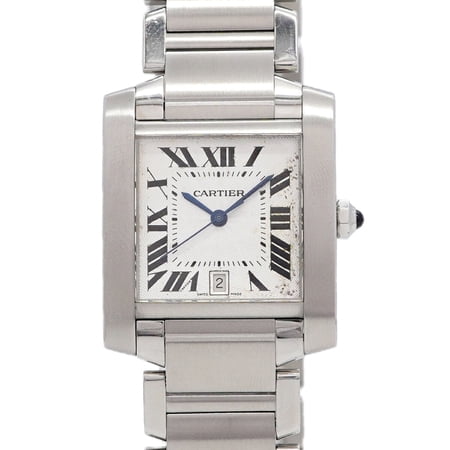
Think of this Cartier watch as a bracelet with a dial. It is a square-cased ladies’ watch that appears to be based on the original Santos, although Cartier does not state it that way. That is the plain-English picture, and this cartier panthere guide keeps to it before the technical and historical sections that follow.
The essentials at a glance
| Question | Short answer |
|---|---|
| When did it first appear? | Hodinkee reports 1983. Sotheby’s also gives 1983 as the debut. |
| What was the original pitch? | It was first released during the Must de Cartier days and marketed to a glamorous 1980s clientele. |
| Was it always in production? | No. Sotheby’s reports it was discontinued in 2004 and rereleased in 2017. |
| What sizes are offered now? | Small (22mm) and medium (27mm). |
| What finishes? | Rose gold, yellow gold, steel and two-tone. |
| What powers it? | Cartier’s standard quartz movement. |
The original line was broader than today’s. It launched in mini, small, medium and large sizes, in two-tone and yellow-gold options, and a steel model followed in 1991.
What the quartz movement tells you
Quartz points to a watch that favors wearability and low-maintenance convenience over mechanical showmanship, an impression reinforced by the jewelry-first bracelet design. It also matters when reading listings: the movement documented for this model is Cartier’s standard quartz, so a description that claims a different movement type deserves a closer look.
Why people still care
For buyers, the draw is the bracelet-like presence and the recognizable Cartier design. Sotheby’s notes that Cartier added an elegant timepiece without fussy embellishments to the Panthère collection, and that it gained a cult following. For collectors, the interrupted production history, the reissue and continued luxury-market interest give the Panthère more weight than a quartz designation alone might suggest.
How the Panthère Works: Design, Movement, and Sizes

Size is the question that trips up most Panthère buyers, so it helps to start with what the watch is made of and then read the numbers. This cartier panthere guide section covers the case, the quartz movement and the bracelet, then the measurements.
Case and dial: a square with a screwed bezel
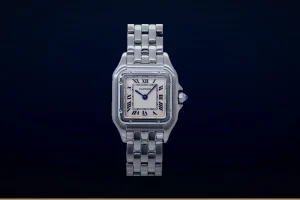
Hodinkee describes the Panthère as having a square case with a bezel secured by eight small screws. The caseback repeats the idea, with eight screws like the bezel. The structure is therefore visible from both sides of the watch. The other signature detail is the sapphire cabochon in the crown. The screwed square case and the cabochon crown can be read as continuity features that link the watch visually to Cartier’s wider design language.
On the white dial, Cartier’s hidden signature sits in the “X” at 10 o’clock.
| Element | Detail |
|---|---|
| Case and bezel | Square case, bezel secured by eight small screws |
| Caseback | Eight screws, like the bezel |
| Crown | Sapphire cabochon |
| Dial (white) | Hidden signature in the X at 10 o’clock |
| Clasp | Concealed deployant |
| Movement | Cartier’s standard quartz |
Quartz movement and concealed clasp
Cartier used its standard quartz movement in the Panthère. The practical benefit is a watch that does not need winding to keep running. The trade-off is that anyone wanting a visible or finished mechanical caliber should look elsewhere; the appeal here lies in the design, proportions and materials.
The bracelet uses a concealed deployant clasp, which Hodinkee notes is easy to unclip with one hand. With the clasp out of sight, the bracelet reads as a continuous line from the case rather than a strap added afterward.
Sizes: reading the measurements
The Panthère is available in small (22mm) and medium (27mm) sizes, in rose gold, yellow gold, steel and two-tone finishes. The medium steel model measures 27mm on each side. On a square case that figure is a side length, so it should not be compared directly with the diameter of a round watch.
| Size | Measurement | What is documented |
|---|---|---|
| Small | 22mm | Listed size |
| Medium | 27mm | 27mm on each side for the medium steel model |
| Mini and large | Not published here | Part of the original launch range |
The original launch offered mini, small, medium and large sizes, in two-tone and yellow-gold options, and a steel model followed in 1991. The 22mm and 27mm figures should therefore not be assumed to apply to every earlier version. When comparing listings, treat the size name and the specific reference as separate pieces of information.
Why the Panthère Matters to Owners
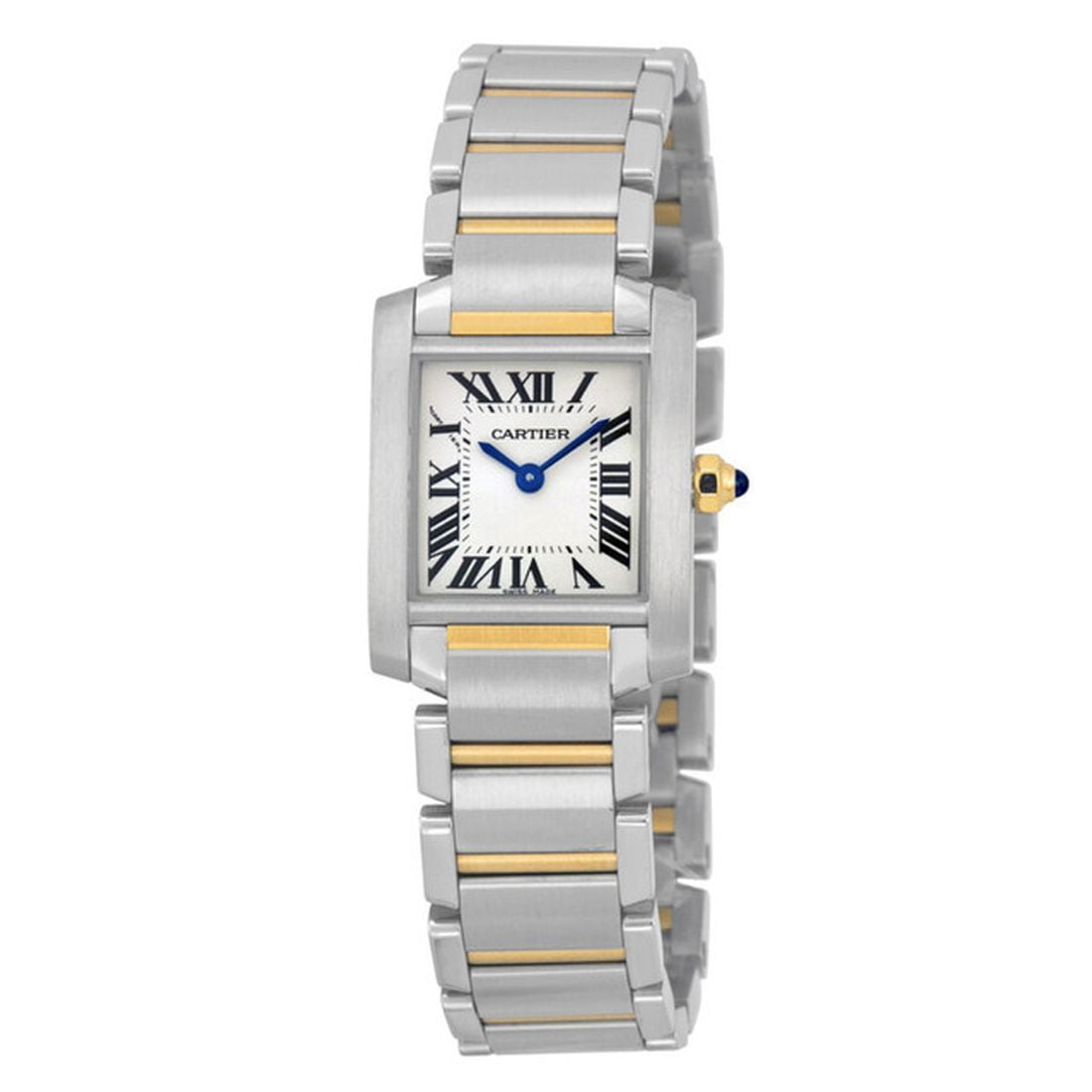
The Panthère rewards a specific kind of buyer: someone who wants a square, jewelry-led watch for regular wear, understands that it is not a sports watch, and will inspect a pre-owned example carefully. This section works through fit, daily use, collecting appeal and value, then closes with a practical checklist.
Fit: two sizes, one square shape
The Panthère comes in small (22mm) and medium (27mm) sizes, in rose gold, yellow gold, steel and two-tone finishes. The medium steel model measures 27mm on each side. Because the case is square, that number describes a compact, flat shape rather than a round diameter, so how it sits depends on wrist shape and taste. Cartier does not publish a wrist-size rule for either model, which makes trying both sizes on in person a better guide than any rule of thumb. As a general observation, the medium has more visual presence, while the small is more discreet and puts the emphasis on the bracelet.
Daily use: easy, but not rugged
Cartier used its standard quartz movement in the Panthère. In practice that means a watch that is ready to wear without winding. Paired with a jewelry-first bracelet design, it suggests a watch that prioritizes wearability and low-maintenance convenience. Low maintenance is not no maintenance: a buyer should still plan for battery replacement and periodic service, and confirm battery condition rather than assume it.
The trade-off is character. This is refined everyday wear rather than a tool watch. The concealed deployant clasp is easy to unclip with one hand, which suits daily convenience, but on a used example its operation and the bracelet’s condition deserve close attention.
Collecting priorities and value
For entry-level positioning, the medium steel model is the useful reference. Hodinkee listed it at $4,600 in 2017, and together with its 27mm size this suggests Cartier treats it as an entry point within the Panthère family. That figure dates from 2017; it is neither a current retail price nor a market valuation.
Collector interest is well supported. The Panthère was discontinued in 2004 and rereleased in 2017, and repeated reissues alongside auction results point to strong appeal among collectors and in the luxury market. Auction results, though, cover very different watches. They show how widely outcomes can vary rather than what any single watch is worth:
| Historical auction example | Result | How to use it |
|---|---|---|
| Cartier Panthère Reference 315AF | 2,772,000 HKD, April 2022 | Historical example only |
| Cartier Panthère Mystérieuse | 698,500 HKD, April 2025 | Historical example only |
| La Panthère de Cartier Reference HPI01342 | 254,000 HKD, February 2023 | Historical example only |
| Cartier Panthère 1925 Reference 2309 | 127,000 HKD, April 2023 | Historical example only |
With such a wide spread, none of these should serve as a current valuation guide.
Inspecting a pre-owned example
- Bracelet and clasp: check for stretch and confirm the concealed deployant opens and closes cleanly.
- Battery and service: confirm battery condition and ask for service history, since the watch uses a quartz movement.
- Case: the square case has a bezel secured by eight small screws, and the caseback of the Panthère de Cartier also shows eight screws, so check that both look consistent and undisturbed.
- Details: on white-dial examples, look for Cartier’s hidden signature in the X at 10 o’clock, and note the sapphire cabochon in the crown.
- Authentication: verify signatures, hallmarks and other marks through a qualified Cartier specialist or auction-house documentation. Water resistance is not stated in the available material, so do not assume any particular seal specification.


Common Misconceptions About the Panthère
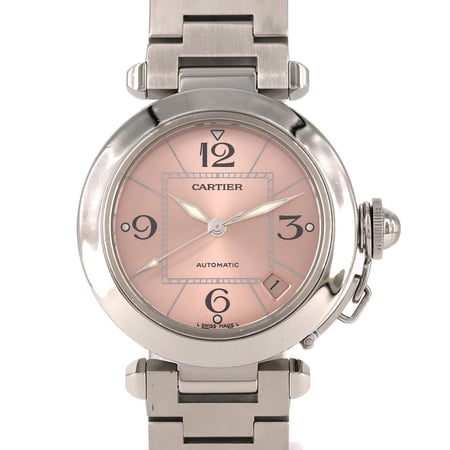
Ask ten people what a Panthère is and you will hear ten tidy answers, several of them wrong. This cartier panthere guide to the common misconceptions sorts the claims that hold up from those that do not, covering history, movement, identity and market position.
Misconception one: the watch and the panther are the same age
Not quite. Sotheby’s says the panthère design was introduced in 1914 and became an iconic motif across Cartier’s high jewelry and watch creations. The watch came much later: Hodinkee reports it was first introduced in 1983, and Sotheby’s gives the same debut year. Hodinkee adds that it was first released during the Must de Cartier days and marketed to a glamorous 1980s clientele. The watch is a later chapter of a longer story, and the panther often takes center stage in Cartier’s jewelry narrative.
Misconception two: it is simply a Santos
Hodinkee describes the Panthère as a ladies’ watch that appears to be based on the original Santos, but notes that Cartier does not state it that way. Read that as an observation about appearance, not an official lineage. The Panthère has details of its own: a square case with a bezel secured by eight small screws, and a caseback that shows eight screws as well.
Misconception three: it is a mechanical watch
Hodinkee reports that Cartier used its standard quartz movement in the Panthère. That suits how Sotheby’s frames it, as a combination of jewelry and timepiece, and how it is positioned: primarily a jewellery-led ladies’ watch rather than a tool watch. Anyone shopping for mechanical watchmaking should know this before opening a single listing.
Misconception four: it vanished and never came back
Sotheby’s states that the watch was discontinued in 2004 and rereleased in 2017; Hodinkee notes that Cartier re-released it in January. Between those dates the design did not stand still. Later styles included limited-edition pieces made for the 2014 centenary celebration, and Sotheby’s describes a collection that keeps evolving in luxurious materials and gemstones.
Misconception five: every Panthère is valued the same
Repeated reissues and auction results point to strong appeal among collectors and in the luxury market. That speaks to interest, not to a single price. The sources give no uniform value for the line, and the variety is considerable. Hodinkee lists small (22mm) and medium (27mm) sizes in rose gold, yellow gold, steel and two-tone. Earlier launches also included mini and large sizes, with a steel model arriving in 1991. Model, materials and condition therefore matter more than the name alone.
What to take from this
- Strengths: a recognizable design with clear ties to Cartier’s panther heritage, described by Sotheby’s as blending high jewelry craftsmanship with watchmaking, in a straightforward quartz format.
- Trade-offs: the quartz movement may disappoint anyone wanting mechanical horology, and the range of sizes and finishes means the Panthère name does not by itself establish rarity.
Frequently Asked Questions
When was the Panthère de Cartier first introduced, and when was it reissued?
Cartier first introduced the Panthère watch in 1983, during the Must de Cartier era, when it was marketed toward a glamorous 1980s clientele. Cartier discontinued the watch in 2004 and reissued it in 2017. Those dates apply to the watch, not to Cartier’s broader panther motif, which appeared in jewelry and other creations earlier.
What sizes does the Panthère come in, and what are their measurements?
The documented modern range includes small and medium models measuring 22mm and 27mm, respectively. Historical launch coverage also identifies mini and large versions, although the supplied specifications do not give their measurements. The medium steel model is specifically documented as measuring 27mm on each side. Confirm the exact dimensions of any vintage or high-jewelry reference before buying.
Does the standard Panthère use a manual-wind, automatic, or quartz movement?
The standard Panthère uses Cartier’s standard quartz movement, rather than a manual-winding or automatic caliber. That choice suits the watch’s jewelry-first design: quartz offers straightforward ownership and avoids the need for regular winding. For a pre-owned example, ask for battery-replacement and service information, and have the seals and water resistance checked before treating it as an everyday watch.
What design details distinguish the Panthère from other Cartier watches?
The Panthère combines a square case with rounded corners, a polished bracelet, and a bezel secured by eight small screws. The caseback also displays eight screws, while the crown carries Cartier’s sapphire cabochon. Its white dial includes Cartier’s hidden signature in the X at 10 o’clock. Together, these details give the watch a recognizable jewelry-oriented identity within Cartier’s design language.
Which Panthère size makes sense for a smaller or larger wrist?
The small 22mm model generally creates a quieter, more delicate presence, while the 27mm medium has greater visual presence and a stronger square-case proportion. The choice should not be reduced to a fixed wrist-size rule: bracelet fit, wrist shape, and the amount of jewelry presence you prefer matter just as much. Try to compare both sizes, and confirm bracelet length before purchase.
Is the Panthère practical as an everyday watch or primarily a jewelry piece?
The Panthère is best understood as a jewelry-led watch rather than a tool watch. Its quartz movement and concealed deployant clasp support convenient daily use, while the polished bracelet and sculptural case prioritize appearance over utility. It can work as an everyday watch if that balance suits you, but buyers should inspect a pre-owned bracelet, clasp, battery, seals, and service history carefully.
Key Takeaways: What to Know Before Buying

The Panthère is best understood as a Cartier icon before it is evaluated as a conventional watch. Introduced in 1983, discontinued in 2004, and reissued in 2017, it has a clear place in the brand’s modern design history.
Its identity depends on a combination of details: the square case, eight-screw bezel, sapphire cabochon crown, integrated bracelet, and jewelry-led proportions. Those elements matter more to the Panthère’s appeal than mechanical complexity; the watch is fundamentally a combination of jewelry and timepiece.
The standard Panthère uses Cartier’s quartz movement. That makes it a sensible choice for buyers who value convenience and low maintenance over the ritual or mechanical interest of a manual-wind or automatic watch.
For sizing, the documented 22mm small and 27mm medium models are useful starting points. Vintage and high-jewelry examples should still be checked individually, since proportions and configurations may differ.
Finally, treat value as reference- and condition-dependent. Historical retail information and auction results provide context, not a promise of future resale performance. A responsible purchase starts with the exact reference, condition, originality, and service history—not simply the name on the dial.