


As an Amazon Associate, we earn from qualifying purchases. We may also earn a commission from other retailers linked on this page, at no extra cost to you.
Choosing between automatic vs quartz watches starts with how you want a watch to fit your life—not with the assumption that one movement is always better. An automatic watch is a mechanical, self-winding watch; a quartz watch uses a quartz crystal, a power source, and electronic circuitry to regulate timekeeping.
That distinction creates the central trade-off. Quartz generally suits buyers who prioritize accuracy and convenience, while an automatic may appeal to those drawn to mechanical construction and traditional watchmaking. The right choice can also depend on how often you wear the watch, how much upkeep you are comfortable with, and what your budget needs to accomplish.
This guide compares those priorities in practical terms: accuracy, upkeep, cost, daily wear, and the reasons some enthusiasts value high-end quartz. Quartz is not limited to basic, inexpensive movements; Grand Seiko’s Caliber 9F, for example, is specified at ±10 seconds per year. That makes precision-focused quartz worth considering alongside mechanical options.
We will also cover solar and light-powered alternatives. Citizen states that its Eco-Drive technology is powered by any light and does not need a battery replacement. For a first watch, a gift, or a dependable daily companion, that approach can change the balance between convenience, maintenance, and long-term appeal.
Quick Answer: Choose the Movement That Fits Your Routine

For most buyers, the choice between automatic vs quartz watches comes down to how much interaction you want from ownership:
- Choose quartz if your priorities are low-intervention ownership, strong everyday accuracy, and the ability to leave the watch unused without accounting for a mechanical power reserve. High-end quartz is not synonymous with disposable or basic: Grand Seiko states accuracy of ±10 seconds per year for its 9F movement, while Citizen lists ±1 second per year for the Caliber 0100 watch.
- Choose automatic if you value a mechanical movement, visible horological craft, and the experience of owning a traditionally made watch more than maximum accuracy. That preference involves accepting a more involved ownership routine.
- Consider solar or Eco-Drive quartz as a practical middle path. Citizen states that Eco-Drive technology is powered by any light and eliminates the need to replace watch batteries.
There is no universally superior movement. Quartz generally suits a first watch, gift, or dependable daily companion when convenience leads; an automatic makes more sense when the movement itself is part of the appeal.
What Matters Most When Choosing a Movement
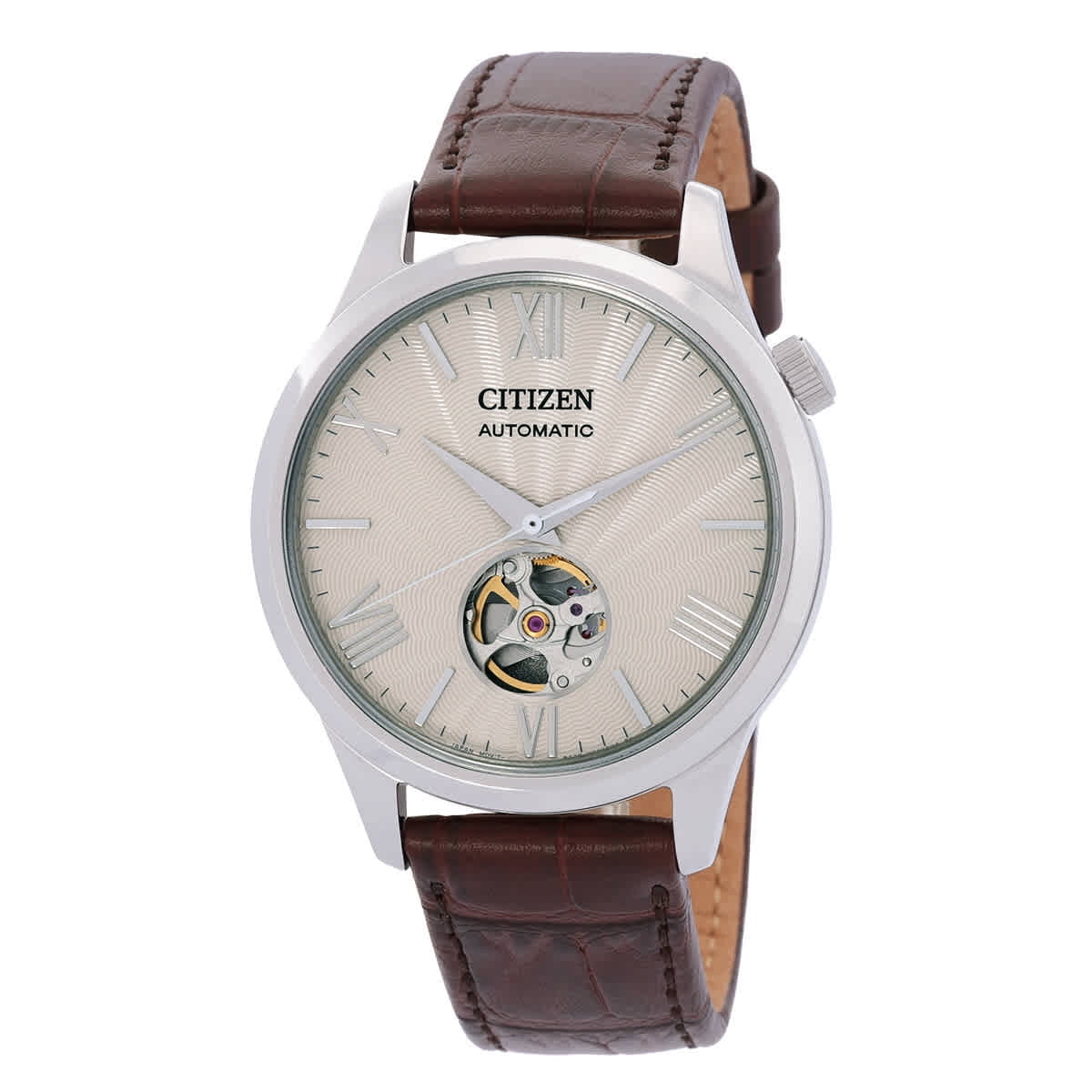
Quartz is often described as simple, but that does not mean every quartz watch performs the same way. In practical terms, a quartz movement combines a quartz crystal, a power source, and electronic circuitry that drives the crystal and counts its vibrations. Most quartz watches are designed around a frequency of 32,768 Hz, a rate that the circuitry can divide into the one-second intervals shown by the hands.
Accuracy depends on how well the movement controls that process. Temperature is a major cause of frequency drift in quartz oscillators, so the most accurate quartz movements typically use temperature compensation. A useful baseline is that low-end stamped, unjeweled quartz movements are described as capable of about ±15 seconds per month at best. That is already practical for many owners, but it should not be confused with the performance of specialized high-accuracy calibers.
Grand Seiko’s 9F provides a clear example of what premium quartz engineering can involve. It is rated to ±10 seconds per year. Its Twin Pulse Control Motor is designed to move longer, heavier hands while preserving battery power. The seconds hand advances through two successive pulse signals per second rather than one longer-looking jump. These details do not turn quartz into a mechanical movement; they show that electronic timekeeping can still involve careful solutions to problems of hand weight, energy use, and visual precision.
The 9F also illustrates why a movement’s architecture matters more than the word “quartz” alone. Each hand axis can move independently, which prevents the hands from brushing against one another and eliminates twitching during time adjustment. Grand Seiko developed a Backlash Auto-Adjust Mechanism to stabilize the seconds hand and help it advance without a visible shudder. Its quartz oscillators undergo a three-month aging process to stabilize their characteristics. The temperature inside the watch is measured 540 times per day, allowing the movement to account for changing conditions. These refinements help explain why a high-accuracy quartz watch can command serious attention from collectors without relying on mechanical complexity.
For the buyer, the practical comparison is less about declaring one category superior and more about deciding what kind of ownership makes sense. An automatic watch should be judged for its mechanical character and for the upkeep that comes with choosing a more mechanically involved timekeeper. Quartz is the safer choice when precise timekeeping and low intervention are the priority. That does not make an automatic watch irrational; it means the appeal is likely to rest more on the movement’s mechanical interest and the pleasure of ownership than on maximizing accuracy.
Power source is another useful distinction within quartz. Grand Seiko’s 9F62, 9F51, and 9F86 calibers are listed with approximately three years of battery life. Light-powered designs take a different approach: Citizen’s Eco-Drive technology is powered by any light source and is designed to eliminate the need for battery replacement. In a first purchase, that can make light-powered quartz especially attractive to buyers who want quartz accuracy with even less routine intervention. The central question in automatic vs quartz watches is therefore not simply which movement is “better,” but whether you value mechanical character, maximum precision, or the least demanding daily ownership.
Budget, Size, and Style: Matching the Watch to Your Life

Set the budget around the watch as a whole, not around the word “automatic.” A reliable movement matters, but so do the case construction, crystal, bracelet or strap, and the availability of service support. An automatic watch is not automatically the better value if its proportions do not suit you, its exterior components are compromised, or maintaining it is impractical. Conversely, a well-made quartz watch can be the more sensible first purchase when accurate timekeeping and low interaction are the priorities.
Price also does not tell the full technical story within quartz. Basic, low-end stamped-metal quartz movements may be rated to keep time to, at best, ±15 seconds per month, according to Hodinkee’s cited example. Grand Seiko’s Caliber 9F shows how different the upper end can be: listed 9F62, 9F51, and 9F86 calibers combine approximately three years of battery life with accuracy of ±10 seconds per year. That makes the movement’s specification, construction, and intended use more useful buying information than the movement category alone.
Let your wardrobe and routine settle the practical question. Quartz is especially logical for an office rotation, travel, sports, or any watch that may spend weeks in a drawer, because it does not ask you to make the movement part of the ritual. A light-powered watch can reduce one element of battery maintenance: Citizen states that its Eco-Drive technology uses any light and never needs a battery. Choose an automatic when the mechanical movement itself—the visible tradition, interaction, or engineering—is part of what you want to own. That is a preference with real value, but it should be treated as such rather than assumed to be a performance advantage.
Size is a fit decision, not a movement decision. At the point of purchase, compare case diameter, thickness, and lug-to-lug distance, then assess whether the bracelet or strap has a proportionate relationship with the case. The same diameter can wear differently depending on those measurements and the shape of the lugs, so a universal “ideal” size is less useful than checking the complete watch against your wrist and wardrobe.
Prioritize the specifications that match your actual use. Citizen provides a useful example: a model with a Super Titanium case and bracelet, anti-reflective sapphire crystal, and WR50/5Bar/166ft water resistance described for still-water swimming addresses weight, scratch resistance, legibility, and a defined recreational use case. Those details may matter more in daily ownership than choosing automatic over quartz.
Finally, consider the total ownership equation. A conventional quartz watch may require battery replacement, while a light-powered model may avoid that particular task. Any service decision—especially for an automatic—should follow the manufacturer’s instructions and reflect the condition of the individual watch; there is no universal automatic service interval that fits every model. Check warranty terms and support before buying as well: Citizen states that the referenced timepiece has a five-year limited warranty.
Automatic, Quartz, High-End Quartz, and Solar Compared

For automatic vs quartz watches, the most useful distinction is not simply mechanical versus electronic. Quartz itself covers a broad performance range, while high-end quartz refines the same basic principle rather than creating a wholly separate movement category.
| Approach | Regulating technology | Typical accuracy framing | Power source | Maintenance considerations | Best fit |
|---|---|---|---|---|---|
| Automatic | Not confirmed in the supplied research | No verified numerical benchmark supplied | Not confirmed in the supplied research | Not confirmed | Buyers choosing for the mechanical ownership experience, provided they accept that the supplied research does not establish its accuracy or service profile. |
| Standard quartz | A quartz crystal, power source, and circuitry; quartz watches are generally designed around 32,768 Hz. | A low-end benchmark is up to about ±15 seconds per month—not a universal figure for every quartz watch. | Battery-powered in the research supplied | Battery replacement may be relevant; broader service requirements are not confirmed. | Buyers prioritizing a straightforward quartz mechanism without paying for specialized precision. |
| High-end quartz | Quartz, with premium implementations including Grand Seiko 9F and Citizen Caliber 0100. | Grand Seiko lists ±10 seconds per year for 9F. Citizen lists ±1 second per year for the Caliber 0100 watch. | Battery details vary by model; Grand Seiko lists approximately three years for specified 9F calibers. | Battery-life and service details vary by caliber; do not assume one schedule applies to all premium quartz watches. | Collectors who want quartz precision and are willing to evaluate the movement and finishing at the model level. |
| Solar or Eco-Drive | Quartz ownership with a light-powered strategy; the supplied research does not separately confirm the regulating mechanism. | Not confirmed as a category | Citizen states that Eco-Drive is powered by any light and never needs a battery. | Battery replacement is designed to be avoided in the cited Eco-Drive claim; other maintenance is not confirmed. | Buyers who want quartz convenience while minimizing routine battery changes. |
The table also shows why “quartz” should not be treated as a single accuracy promise. The crystal-and-circuit architecture is common to the category, but the cited figures range from a low-end benchmark of about ±15 seconds per month to annual claims of ±10 seconds and ±1 second in specific high-end examples.
Solar and Eco-Drive models belong in the quartz conversation because the meaningful difference here is the power strategy: Citizen describes Eco-Drive as using any light and eliminating the need for a battery. That can make it a sensible middle ground for a first watch, while the exact accuracy and long-term maintenance profile still need to be checked for the individual model.

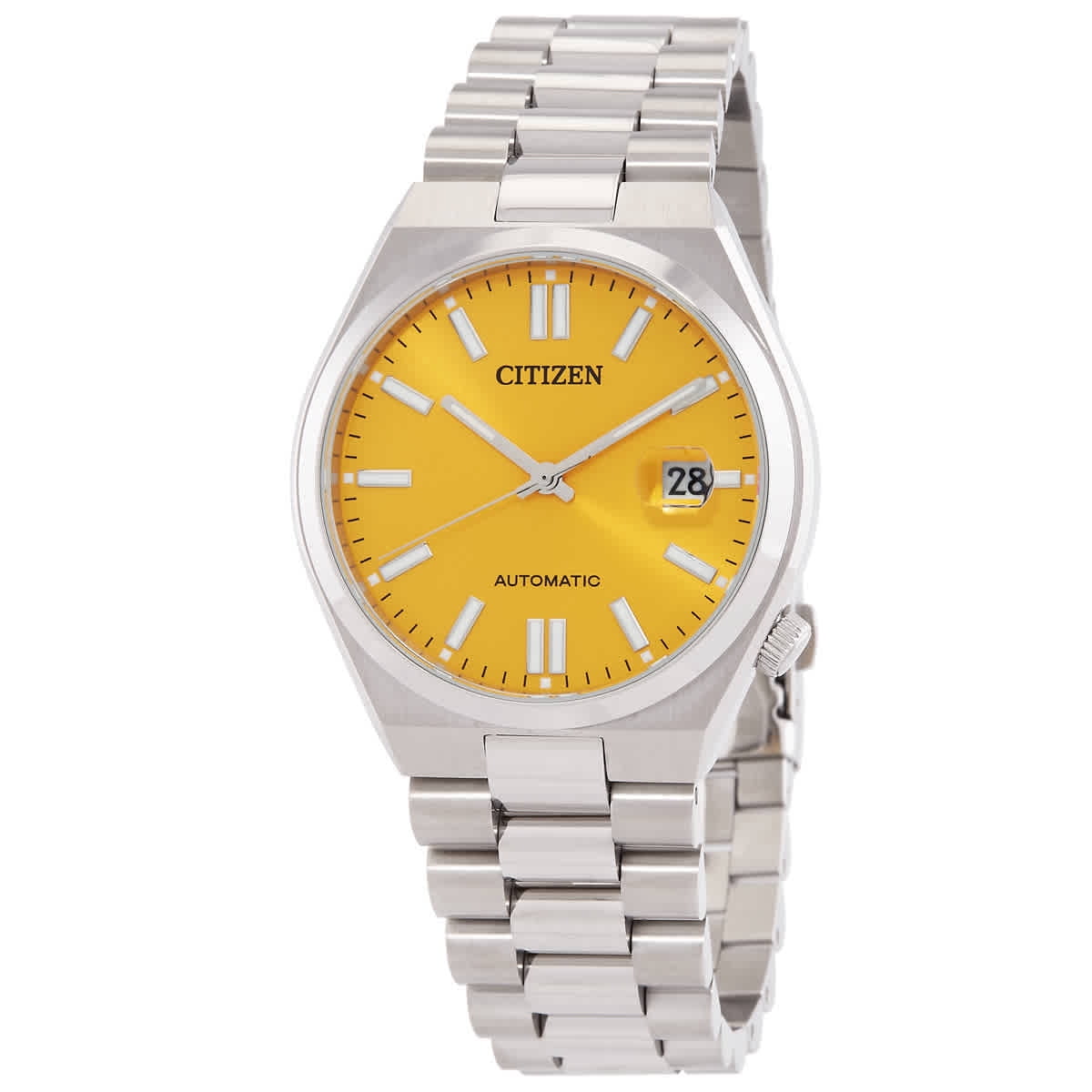

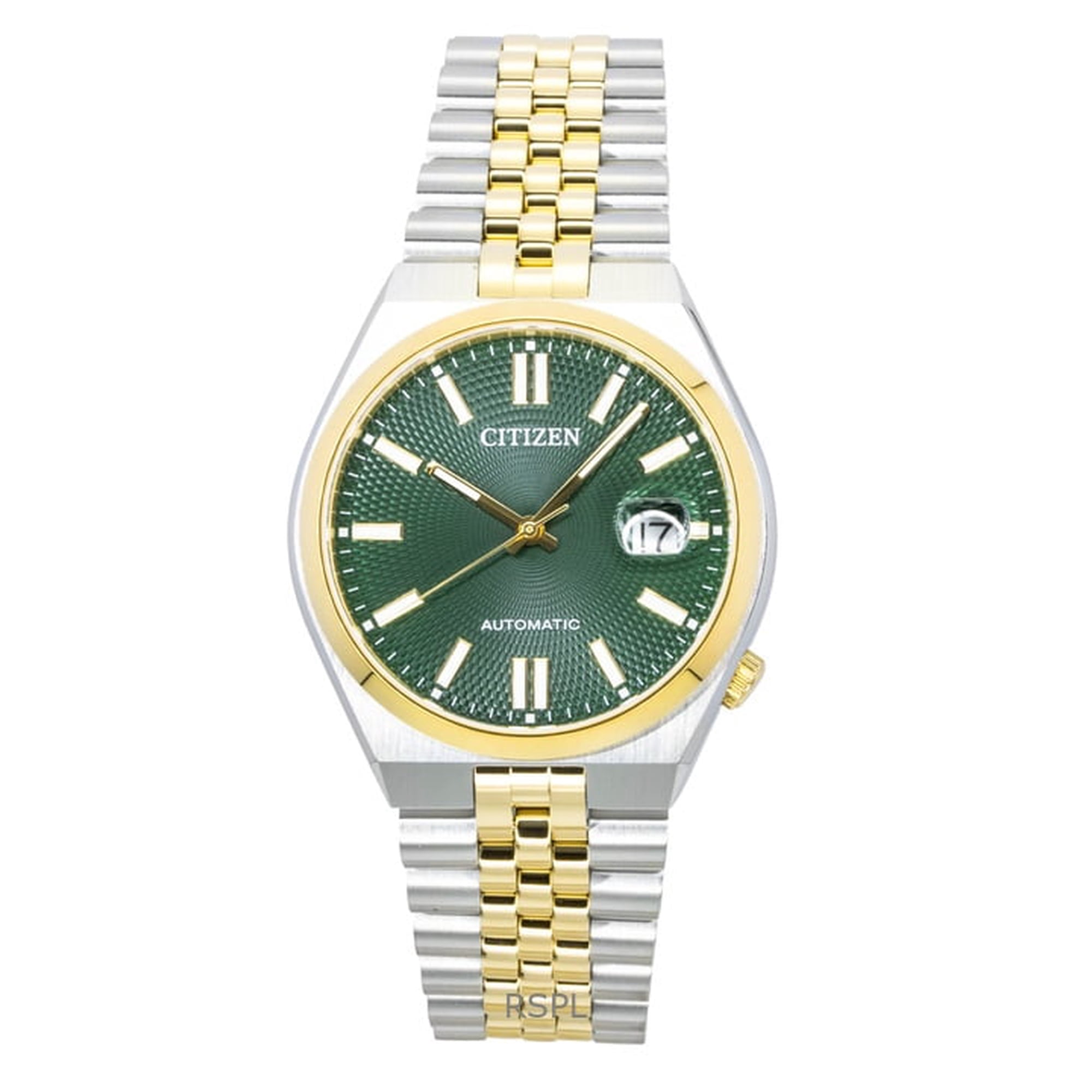
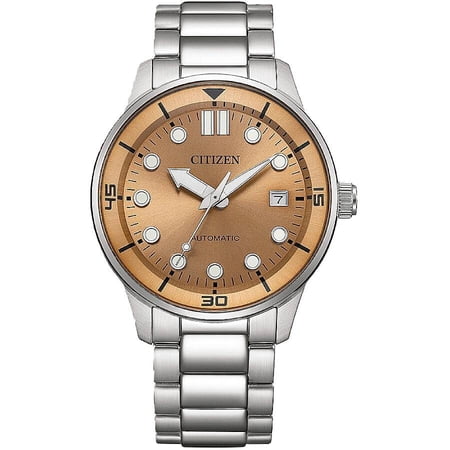
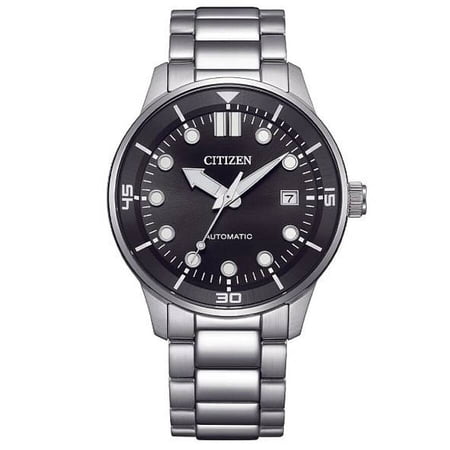


Prices and availability are accurate as of the date/time indicated and are subject to change.
Pros and Cons of Automatic and Quartz Watches

The practical and emotional sides of automatic vs quartz watches can point in different directions. An automatic watch may appeal to someone who enjoys traditional watchmaking, the visible idea of a self-winding mechanism, and the movement as an engineered object. That interest is not the same as better timekeeping: it is a reason to value the ownership experience.
Strengths
- Automatic: Mechanical construction gives the watch a sense of continuity with traditional horology. For many enthusiasts, the pleasure lies in understanding and appreciating the coordinated parts rather than treating the watch only as a timekeeping instrument.
- Quartz: Quartz offers strong accuracy potential and convenient daily use, but its range is wide. It includes basic movements as well as high-accuracy examples such as Grand Seiko 9F and Citizen Caliber 0100.
- Solar and Eco-Drive: Citizen says Eco-Drive is powered by any light and does not need a battery replacement. That can reduce one recurring ownership task for buyers who prefer convenience.
- High-end quartz: Refinement is not exclusive to mechanical watches. High-end brands including Grand Seiko have invested in quartz, and the technology can be appreciated as an ingenious combination of mechanical and natural phenomena.
Trade-offs
- Automatic: Accuracy and servicing needs should not be assumed from the word “automatic.” Check the specific caliber and the manufacturer’s service guidance before buying, since the supplied research does not establish a universal accuracy figure or maintenance interval.
- Quartz: Battery-dependent examples eventually require battery replacement. Some buyers may also find less emotional connection in electronic regulation than in the mechanical interaction and craftsmanship associated with an automatic watch.
The better choice is therefore the one whose compromises feel acceptable: mechanical interest and traditional character, or dependable convenience and a broader technical spectrum.
Frequently Asked Questions About Automatic vs Quartz Watches
What is the practical difference between automatic and quartz movements?
Quartz watches use a quartz crystal, a power source, and electronic circuitry to count vibrations and drive the hands. Most quartz crystals are designed to vibrate at 32,768 Hz. An automatic watch belongs to the mechanical category, so the ownership experience is more closely tied to traditional watchmaking than to electronic timekeeping. Choose based on whether convenience and precision or mechanical interest matters more to you.
Which movement is more accurate out of the box, and what should I realistically expect?
Quartz is generally the safer choice for accuracy, but performance varies considerably. A low-end stamped-metal, unjeweled quartz movement may be rated to, at best, ±15 seconds per month. Grand Seiko’s Caliber 9F is rated at ±10 seconds per year, while the Citizen Caliber 0100 is specified at ±1 second per year. Temperature can cause quartz frequency drift, so the most accurate movements use temperature compensation.
How much maintenance does an automatic watch require compared with a quartz watch?
The fact bank does not establish a universal service interval for either movement, so buyers should not rely on a single fixed schedule. An automatic watch generally demands more attention to mechanical service than a basic quartz watch, while quartz ownership commonly includes eventual power-source replacement. Before buying, check the brand’s service guidance, local support, replacement-part availability, and the expected cost of servicing the complete watch rather than only the movement.
Do quartz watches need battery changes, and what alternatives are available?
Some quartz watches use replaceable batteries, and the battery life of specific models should be checked with the manufacturer. Grand Seiko’s 9F62, 9F51, and 9F86 calibers are specified with approximately three years of battery life. Solar quartz is an alternative: Citizen states that Eco-Drive is powered by any light and eliminates the need to replace watch batteries. Confirm the exact power system before purchase.
Are high-end quartz movements worth considering for a first watch?
They can be, especially when accuracy and low-intervention ownership are priorities. High-end quartz refines the basic technology rather than abandoning it: Grand Seiko’s Caliber 9F is assembled entirely by hand, measures temperature inside the watch 540 times a day, and is rated at ±10 seconds per year. Citizen’s Caliber 0100 is specified at ±1 second per year. Compare the whole watch, including case, crystal, bracelet, service support, and design.
Is automatic or quartz better for everyday wear, travel, and sports?
Quartz is usually the more practical starting point when consistent timekeeping and minimal interaction are your priorities, particularly for travel or an active routine. Solar quartz can further reduce battery-related attention; Citizen says its Eco-Drive technology is powered by any light. An automatic may be the better emotional choice if you value mechanical watchmaking and are comfortable with additional ownership considerations. Also check water resistance, crystal, case, strap, and service support.
Final Advice: Choose the Ownership Experience You Want

The best choice in the automatic vs quartz watches comparison is the one that matches your priorities, not a movement category that wins on every measure.
Choose quartz when accurate, convenient timekeeping is the main requirement. Performance varies widely: low-end stamped-metal, unjeweled quartz movements may be accurate to about ±15 seconds per month, according to Hodinkee. At the other end, Grand Seiko’s 9F is rated to ±10 seconds per year, while Citizen Caliber 0100 is rated to ±1 second per year.
Choose an automatic when the mechanical movement and traditional watchmaking experience matter more to you than the highest possible accuracy. Before committing, check the specific caliber and the manufacturer’s service guidance; “automatic” alone does not tell you enough about ownership.
Solar, including Citizen Eco-Drive, suits buyers who want quartz practicality with less battery-related intervention. Citizen says Eco-Drive is powered by any light and does not need a battery.
Before buying, write down five things: intended use, acceptable upkeep, preferred size, total budget, and the exact specifications you require. That list gives you a more useful decision framework than ranking automatic, quartz, or light-powered watches universally.


.jpg)
.jpg)
