


As an Amazon Associate, we earn from qualifying purchases. We may also earn a commission from other retailers linked on this page, at no extra cost to you.
The Seiko Prospex Turtle is a modern recreation of Seiko’s 1970 dive-watch design within the Prospex collection. Seiko describes the original model as redesigned for contemporary diving, retaining the earlier watch’s distinctive character while adding modern technology. The historical design included a large case and a crown positioned at 4 o’clock.
This seiko prospex turtle review considers the watch through its design, documented durability, movement functions, wearability, and practical trade-offs. It is an evidence-led overview rather than a first-person test: observations from cited publications are attributed to those sources, and Eva Watches did not handle or test the watch. Specifications and historical claims are drawn from the cited sources, with particular attention to what the evidence supports—and what it does not.
Verdict in Brief

This seiko prospex turtle review finds a convincing modern interpretation of Seiko’s historically faithful cushion-case dive-watch design. The principal strengths are documented 200 m water resistance on modern Prospex models, sapphire crystal with anti-reflective treatment on the premium SLA033, and the SRP models’ useful 4R36 automatic movement with hand-winding and stop-seconds.
The trade-offs are substantial dimensions—44.3 mm by 14 mm for the SRP775/SRP777 family—and meaningful variation across Turtle generations. The SLA033 is the premium, limited-edition interpretation, mainstream SRP models offer the more accessible format, and the Mini-Turtle is 2 mm smaller than the SRP777 family while using the same base movement. One report found the SRP775 bezel slightly stiff but precise, very bright lume, hand-winding, hacking, and a rate of -2 seconds per day; that is one watch’s result, not a universal claim. Long-term service-interval and resale data are not documented in this research package.
Design and Build: The Cushion Case That Defined the Turtle

The Turtle’s design begins with Seiko’s 1970 dive watch, rated to 150 m and distinguished by a crown at 4 o’clock, recessed beneath the broad case for protection. The lineage continued with the Japan-market 6306-7000/1, introduced in 1976, and the closely related worldwide 6309-7040/9. Their defining feature was not a conventional round case but a softly curved, oblong profile. Viewed from above, it suggests a turtle shell—hence the nickname.
That silhouette remains the central virtue of the modern recreations. Seiko says the Prospex version is slightly larger than the original while retaining the 1970 aesthetic. The familiar SRP775 and SRP777 measure 44.3 mm by 14 mm, according to Hodinkee. The higher-spec SLA033 is broader at 45.0 mm but slimmer at 13.0 mm. Those dimensions matter: the case has substantial wrist presence, yet its rounded shoulders and short-looking visual span make it read differently from a similarly wide, straight-sided diver.
The documented durability package varies by model. The SRP models are rated to 200 m and use stainless-steel cushion cases, while Seiko specifies an anti-scratch case coating, 200 m water resistance, and screw-down crown and caseback for the SLA033. The SLA033 also adds a domed sapphire crystal with anti-reflective treatment and a bezel edge polished with Seiko’s Zaratsu technique. These are meaningful construction upgrades, not changes to the underlying visual language.
Strap choice helps separate the principal references. The SLA033 is fitted to an ultra-durable silicone strap and hand-assembled at Seiko’s Watch Studio in Shizukuishi. In the SRP range, SRP775 comes on a bracelet, while SRP777 uses a silicone rubber strap. Hodinkee specifically noted the SRP775’s bracelet construction, bezel alignment, smooth but slightly stiff bezel rotation, crisp detents, and bright lume from its Lumibrite hands and markers.
Naomi Uemura’s 18-month, 12,000-kilometre sled-dog journey from Greenland to Alaska provides important historical context for the original watch’s reputation for durability. It should not be treated as laboratory evidence for the modern models; their relevant evidence is the documented case construction and water-resistance rating.
Movement and Performance: 8L35, 4R36, and the Mini-Turtle Base

The SLA033 uses Seiko’s automatic caliber 8L35, a movement the manufacturer describes as designed for dive watches. That establishes its intended application, but the available documentation here does not verify an accuracy figure, power reserve, or service recommendation. Those omissions matter in a sourced seiko prospex turtle review: the movement’s name alone should not be treated as a complete performance specification.
The documented movement in the SRP775 and SRP777 family is the automatic Seiko 4R36. In practical terms, it provides hand-winding and a stop-seconds function, allowing the wearer to wind the watch manually and stop the seconds hand when setting the time. The movement runs at 21,600 vibrations per hour and uses 24 jewels. These are the functions and specifications a buyer can reasonably expect from the documented SRP models—not assumptions that should automatically be extended to every Turtle variant.
That feature set marks a meaningful difference from the historical 6309A. The 6309A used in the 6309-7040/9 lacked hacking seconds and had a lower jewel count than the 6306A. The 6306A, used in the 6306-7000/1, therefore differed in both jewel count and hacking capability. The comparison is useful for collectors: “vintage-correct” movement behavior is not identical across the original references, while the modern 4R36 adds functions that the documented 6309A did not provide.
Hodinkee reported one SRP775 running two seconds slow per day with negligible variation. That is a documented sample, not a universal accuracy specification for the 4R36 or for every Seiko Prospex Turtle.
The Mini-Turtle uses the same base movement as the larger Turtle models, according to the available research. However, that research does not establish every Mini-Turtle technical detail. There is also no verified long-term service-interval data here for the 8L35, 4R36, or 6R35. Accordingly, this section does not invent maintenance guidance or assign 6R35 specifications that are absent from the fact record.
Alternatives: SLA033, SRP Turtle, and Mini-Turtle

For this seiko prospex turtle review, the principal choices separate mainly by case size, movement, and level of equipment. The original 1970 watch is included only as historical context, not as a current buying option.
| Family or reference | Case size | Movement | Water resistance | Crystal / strap | Best fit |
|---|---|---|---|---|---|
| Original 1970 model | Not confirmed | Not confirmed | 150 m | Not confirmed | Historical reference point |
| SLA033 | 45.0 mm × 13.0 mm | 8L35 | 200 m | Domed sapphire; silicone strap | Collectors seeking the premium re-creation |
| SRP775 / SRP777 | 44.3 mm × 14 mm | 4R36 | 200 m | Crystal not confirmed; bracelet on SRP775, silicone strap on SRP777 | Buyers wanting the larger, accessible Turtle format |
| Mini-Turtle | 42.3 mm | Same base movement as the larger Turtle models | Not confirmed | Not confirmed | Buyers who want a smaller case |
The SLA033 is not simply a smaller variation of the SRP models: it uses the higher-positioned 8L35 and adds a documented domed sapphire crystal, while the SRP specifications available here do not confirm their crystal material. The SRP775 is supplied on a bracelet, whereas the SRP777 uses silicone. The Mini-Turtle’s 42.3 mm case is approximately 2 mm smaller than the SRP777 and its relatives, while retaining the same base movement family.
That is enough to establish the practical choice: SLA033 for premium historical execution, SRP775 or SRP777 for the larger mainstream format, and Mini-Turtle for reduced diameter. This comparison deliberately does not assess SRPE93, King Turtle references, PADI variants, SPB315, SPB317, SPB333, SPB359, or 6R35 because the research package does not provide usable verified specifications for them.
Pros and Cons

Strengths
- Recognizable design: The Prospex recreation remains closely tied to Seiko’s iconic 1970 dive watch, giving the Turtle a clear historical identity.
- Credible dive-watch specification: Documented modern SRP models and the SLA033 provide 200 m of water resistance.
- Useful everyday movement: The SRP775’s 4R36 offers automatic winding, hand-winding, and stop-seconds, making setting the watch more practical.
- Strong low-light legibility: Hands-on reporting describes the lume as very bright, while the SRP models use Lumibrite hands and markers.
- More wearable alternative: The Mini-Turtle’s 42.3 mm case is 2 mm smaller than the SRP777 and related larger models.
Trade-offs
- Substantial proportions: The SRP models measure 44.3 mm by 14 mm, while the documented SLA033 measures 45.0 mm by 13.0 mm. That can create fit concerns on smaller wrists.
- Alignment caveat: Early reports mention bezel-alignment complaints, although the cited SRP775 examples showed no such problem.
- Limited long-term evidence: The cited material documents specifications and short-term observations, but does not establish long-term service requirements or value trends. Buyers should treat those areas as unresolved rather than assume every Turtle reference will behave like the SLA033.
Where to Buy

The affiliate database contains no matched products for this section, so no specific product or retailer is listed. Readers using this seiko prospex turtle review as a buying reference should verify the exact reference, movement, dimensions, regional pricing, and authorized-retailer status before purchasing. These details can vary between Seiko models and markets; do not rely on a similar-looking listing without confirming the reference supplied by the seller.
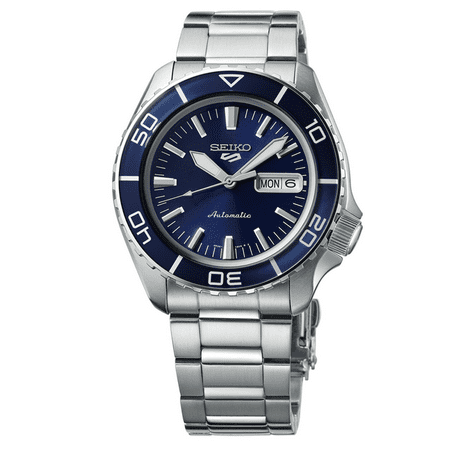

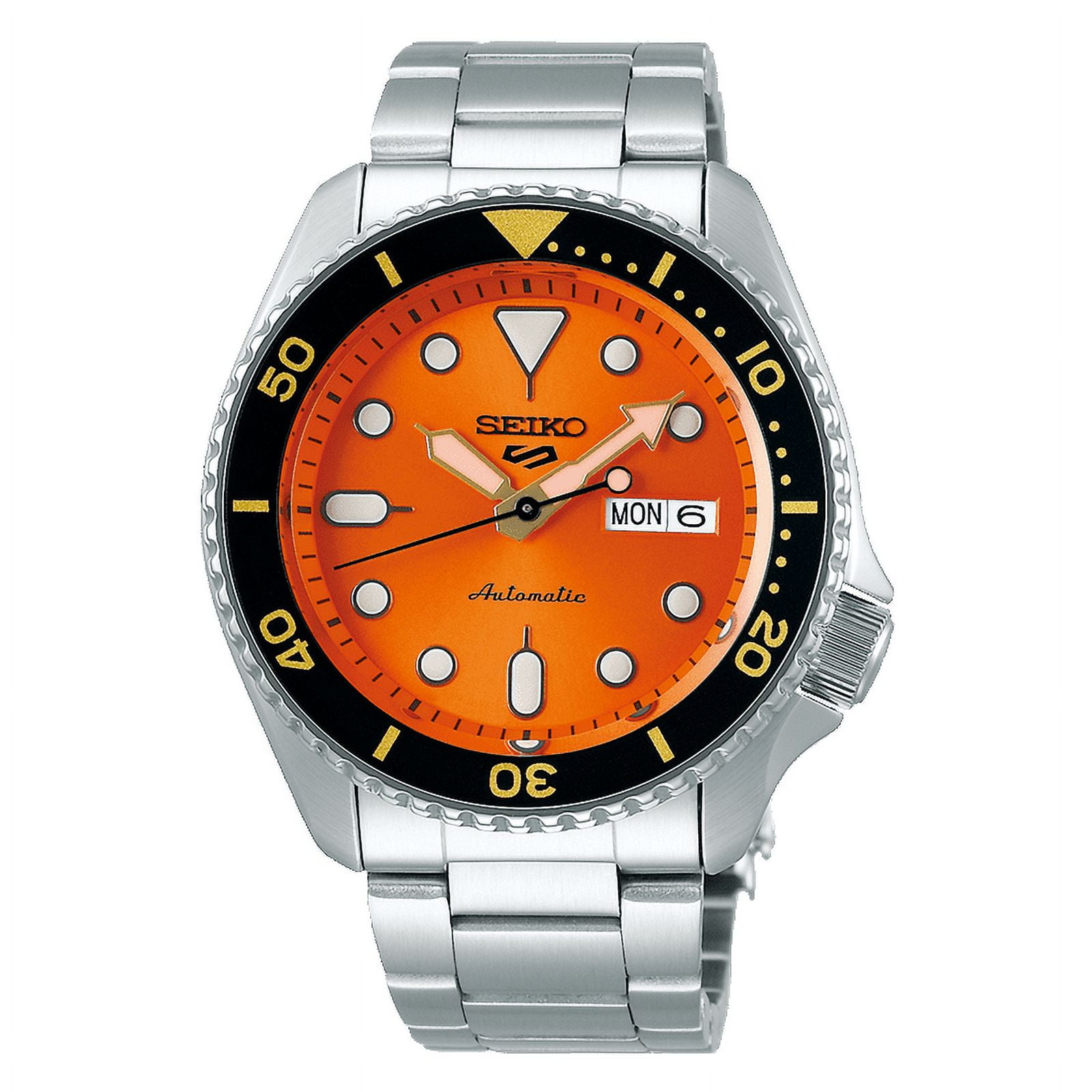

Prices and availability are accurate as of the date/time indicated and are subject to change.
Frequently Asked Questions
How does the modern Prospex Turtle compare with the 1970 original in size and features?
The modern Prospex recreation is slightly larger while retaining the 1970 watch’s cushion-case design and 4 o’clock crown position. The original was rated to 150 m, whereas the documented modern recreation is rated to 200 m and adds a scratch-resistant case, domed sapphire crystal with anti-reflective treatment, and a Zaratsu-polished bezel edge. The modern model uses automatic caliber 8L35.
Which Turtle models are limited editions, and how many pieces were produced?
The SLA033 is documented as a limited-edition recreation of the 1970 automatic dive watch. Seiko specified a worldwide production of 2,500 pieces, with sales scheduled to begin in July 2019 through Seiko boutiques and main Seiko retailers. The available facts do not establish production numbers for the SRP models, the Mini-Turtle, or other later Turtle variants, so their edition status should be checked against the exact reference and Seiko’s documentation.
What movements power the different Turtle recreations, and what functions do they provide?
The SLA033 uses automatic caliber 8L35, which Seiko describes as designed for dive watches. The SRP775 and SRP777 use automatic caliber 4R36, with hand-winding and a stop-seconds function; the cited documentation also gives 24 jewels and a 21,600 vph frequency. The Mini-Turtle is reported to use the same base movement as the larger Turtle models. A power-reserve figure is not documented in the available facts.
What water resistance and durability features are documented for the modern re-creations?
The SLA033 is documented with 200 m water resistance, a stainless-steel case with an anti-scratch coating, a screw-down crown and caseback, and magnetic resistance of 4,800 A/m. Its domed sapphire crystal has anti-reflective treatment, and its bezel edge receives a Zaratsu mirror finish. The SRP775 and SRP777 are also documented at 200 m, with stainless-steel cushion cases and Lumibrite hands and markers.
How do the SRP Turtle and Mini-Turtle differ in case size and movement?
The documented SRP775 and SRP777 measure 44.3 mm by 14 mm, while the Mini-Turtle measures 42.3 mm—about 2 mm smaller than the SRP777 and related models. The Mini-Turtle uses the same base movement as the larger Turtle models, so the principal documented distinction is case size rather than a separately identified caliber. Check the exact reference for its detailed movement specification and equipment.
Final Verdict: Who Should Buy the Seiko Prospex Turtle?

The larger SRP-style Turtle is the clearest choice for readers who value the historic cushion-case silhouette and a practical dive-watch specification. The documented SRP775 and SRP777 variants measure 44.3 mm by 14 mm, are water resistant to 200 m, and use Seiko’s 4R36 automatic movement with hand-winding and stop-seconds functions. That combination makes a strong case for the design, provided those dimensions suit your wrist and you do not need a compact watch.
The Mini-Turtle points in the more sensible direction for buyers who want the same family resemblance in a smaller case: the documented diameter is 42.3 mm, around 2 mm less than the larger models. Its exact movement, water-resistance rating, and other specifications should still be confirmed for the specific variant before purchase.
The SLA033 is best understood as a historically focused limited edition rather than a general recommendation. It combines the 8L35 automatic caliber, sapphire crystal, anti-scratch case treatment, and 200 m water resistance, and Seiko limited production to 2,500 pieces worldwide. Those documented features describe the watch without making an unsupported price or value judgment.
This review should not be treated as a blanket recommendation for readers seeking exact regional pricing, proven long-term service data, or a particular King Turtle, PADI, SRPE93, or SPB specification not covered by the evidence. It is a source-backed review of documented variants—not a claim that Eva Watches personally tested every Turtle.


.jpg)


